Published By Tuna Karslı, editorHow guides are checked
Why charter?
For anyone who wants to enjoy the sea without owning a boat, chartering is the most practical answer. You pay only for the weeks you use, someone else takes care of maintenance and winter storage, and you can sail a different cruising ground every year. The Mediterranean, the Caribbean, the Bahamas, Australia’s Whitsundays and Thailand are among the most popular charter destinations, each offering warm water, sheltered anchorages and a dense network of bases.
The main types of charter
Bareboat charter
charter is for experienced sailors who want to skipper the boat themselves. The charterer takes full responsibility for the yacht and the crew. Charter companies normally ask for a recognised qualification, such as the , an RYA certificate or an equivalent national licence, plus evidence of relevant experience. In some countries a radio operator’s certificate is also required, and some operators ask for a second crew member with sailing experience.
Skippered charter
A skippered charter puts a professional skipper on board for the duration. It suits less experienced groups, larger yachts, demanding sailing areas and anyone who simply wants to relax. The skipper is responsible for the safe conduct of the passage and often knows the best local anchorages and restaurants, while the guests decide how they want to spend the week.
Crewed charter
A fully crewed charter provides a captain, a chef and service crew. It is the norm on gulets, large catamarans, motor yachts and superyachts. Prices are considerably higher, but the standard of service is closer to a boutique hotel. Larger yachts are often chartered on MYBA terms, where an Advance Provisioning Allowance is paid on top of the charter fee to cover running costs such as fuel, food and port charges.
Cabin charter
Cabin charter lets you book a single cabin on a crewed yacht or gulet, sharing the boat with other guests. No boating experience is needed, and it is usually the most affordable option for solo travellers and couples.
| Type | Who sails the boat | Qualification needed | Relative cost |
|---|---|---|---|
| Bareboat | You | Yes | Lowest per boat |
| Skippered | Professional skipper | No | Boat price plus skipper’s fee |
| Crewed | Full professional crew | No | Highest |
| Cabin | Professional crew | No | Lowest per person |
Bareboat or skippered: how to decide
- Experience: be honest about the crew’s experience of anchoring, berthing in a crosswind and handling a yacht in a building breeze. If only one person aboard can sail, a skipper adds a valuable safety margin.
- Cruising area: sheltered areas with short passages, such as Greece’s Ionian Islands or the British Virgin Islands, are well suited to bareboat charter. Windier or more complex waters reward local knowledge.
- Boat size: handling a 50-foot yacht or a large in a crowded harbour is a big step up from a 35-footer.
- Space: a skipper usually takes a cabin, which reduces guest accommodation, so you may need a larger boat.
- Holiday style: with a skipper you can switch off completely; on a bareboat someone is always on duty.
A popular middle path is to hire a skipper for the first day or two, then carry on bareboat once you are comfortable with the boat and the area.
What drives the price
Season is the single biggest factor. In the Mediterranean, July and August are peak months; June and September are shoulder season; spring and autumn are cheapest, often by a wide margin, and the anchorages are quieter. In the Caribbean the pattern is reversed, with the northern winter as high season.
Boat type and size come next. A sailing yacht is usually more economical to charter and run than a motor yacht. A catamaran offers much more space than a of similar length and costs noticeably more. Gulets and motor yachts are priced according to size, age and level of service, across a very wide range.
Duration also matters. A week, normally Saturday to Saturday, is the standard charter unit and gives a lower daily rate than short hires. Many companies offer discounts for two weeks or more, and for early bookings.
Costs on top of the charter fee
The headline price is rarely the whole story. Budget for:
- fuel for the engine, generator and tender ;
- marina and harbour fees, mooring buoys and national park charges;
- a starter pack or transit log fee, final cleaning and bed linen, where not included;
- local tourist or cruising taxes, which apply in some countries;
- damage waiver or deposit insurance;
- extras such as a stand-up paddleboard, snorkelling or diving equipment, Wi-Fi or a gennaker;
- the skipper’s fee and food, on a skippered charter;
- provisions and a gratuity for the crew, on a crewed charter.
The contract and the security deposit
Read the charter agreement carefully before you sign. It should cover the description of the yacht, the charter dates and base, the price and payment schedule, the deposit, cancellation terms, insurance cover and , the damage procedure, any sailing area restrictions and the return conditions.
The security deposit protects the company against damage and loss. It is returned, or the card authorisation released, after the boat is checked back in without problems. Deposits depend on the value of the yacht and commonly run to several thousand euros or dollars. A damage waiver, bought for a non-refundable fee, reduces or eliminates the amount at risk; separate deposit insurance from a specialist insurer is another option.
Check the cancellation clause, which sets out how much of the fee is refunded at each stage before departure. Travel or charter cancellation insurance can limit your loss if plans change unexpectedly.
Handover and return
At check-in, go through the boat thoroughly with a member of the base staff. Note every existing scratch, ding or defect on the check-in form and photograph it. Check the inventory, including lifejackets, fire extinguishers, flares, anchor and chain, tender and outboard, galley equipment and bedding.
Make sure you understand the boat’s systems before you leave: starting and stopping the engine, reefing and handling the sails, the windlass, fresh-water and electrical systems, the heads, the chartplotter and the VHF radio. Ask about anything you are not sure of; a question on the dock is far easier than a problem at sea.
On the last day, return the boat on time, tidy, with fuel at the agreed level and with any damage reported honestly. Walk round with the base staff for the check-out inspection, after which the deposit is normally released.
Safety and responsibility
On a bareboat charter you are responsible for the boat and everyone aboard. Use pilot books, cruising guides, the base briefing and local advice to learn the area. Respect the forecast: many charter companies set a wind limit, often around force 6, above which you should not leave harbour, and some areas are off-limits altogether. Take those limits seriously.
Look after the environment too. In the Mediterranean, avoid anchoring on Posidonia seagrass meadows, which are protected in many places. In the Caribbean, the Bahamas and Australia, never anchor on coral and use public moorings where they are provided. Take all rubbish ashore and use holding tanks in anchorages and near the coast. Responsible use is what keeps the best anchorages worth visiting.
Find bareboat, skippered and crewed yachts on our charter listings page.
Read next
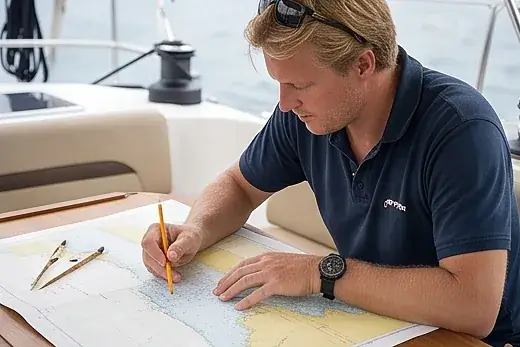 How to plan a sailing holiday: route, budget, crew and seasonA sailing holiday combines travel, adventure and a slower pace of life: waking up in a…
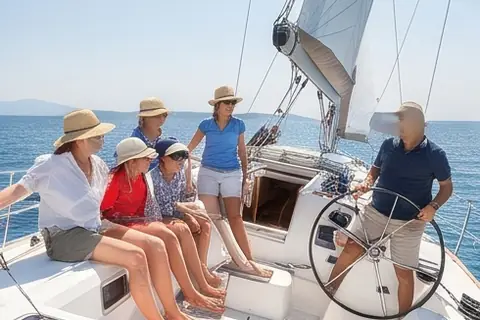 Boat charter guide: bareboat vs skippered, prices, contracts and what to watch out forOverview of boat chartering For those who want to enjoy the sea without owning a boat,…
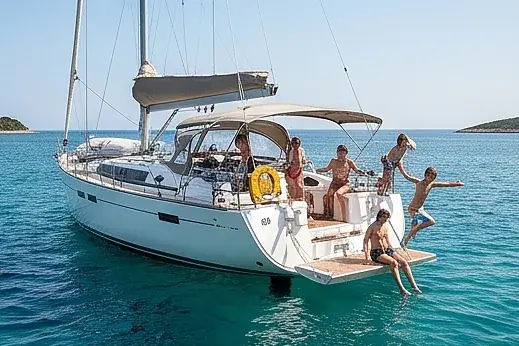 Boat charter guide: hourly, day, skippered and bareboat optionsChartering is the simplest way to get out on the water without the cost and commitment…
Reader ratings
No ratings yet. Was this useful? Rate it and add what you know: corrections and first-hand tips help the next reader.
★ Rate this guide
Suggest a correction
Cite this page
Bareboat charter vs skippered: costs, contracts and what to check. Boat Almanac, updated 22 October 2026. https://boatalmanac.com/articles/bareboat-charter-vs-skippered/ (accessed 21 November 2026).