Boat maintenance calendar, month by month
Month-by-month to-do list for boat owners in the northern temperate waters (the Mediterranean, Europe, North America). Every boat has different needs; adapt this to your own boat. South of the tropics the seasons are six months on, and the tropics have storm and monsoon seasons instead of a winter: see sailing seasons around the world.
January
- Visit the boat after every gale: covers, lines, chafe, bilge, and the stands and chains if she is ashore
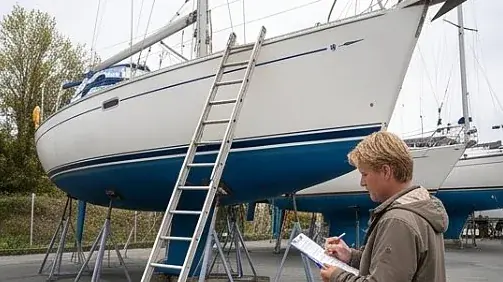
- If ashore, look the hull over while it is dry: blisters, cracks around the keel joint, the rudder bearing play, the anodes
- Write this year's job list and budget; get written quotes now, while yards have time
- Book the spring haul-out or launch date and the jobs that need a yard slot (antifouling, engine service, rigging)
- Check every expiry date: insurance, registration, radio licence, liferaft service, flares, fire extinguishers, EPIRB battery
- Order the spares you used last season, and the ones you wished you had
February
- Send the sails and the canvas for washing, checking and repair; sailmakers are quiet now and booked solid in April
- Have the rigging inspected if it has not been in the last two years; replace standing rigging at about 10 to 15 years
- Engine: book the annual service (oil and filters, impeller, belts, coolant, fuel filters, the heat exchanger and exhaust elbow on older engines)
- Service the seacocks: every one should open and close by hand; replace any that are stiff or corroded, and double-clamp the hoses below the waterline
- Check the gas system: hoses dated, the regulator, the solenoid and a leak test
- Plan the season: where you will go, when, and which marinas need booking now
March
- Antifouling: sand or wash the hull, check the old paint, and apply new paint within the maker's launch window
- Change the anodes on the shaft, propeller, sail drive and hull when about half is gone
- Propeller and shaft: check for play, nicks and the cutless bearing; grease the feathering or folding prop
- Sail drive or stern gland: check the diaphragm age and any weeping
- Batteries: charge fully, test under load, clean and tighten the terminals
- Safety gear: lifejackets (gas cylinders and auto-inflate heads), harnesses, jacklines, the liferaft and grab bag, the first-aid kit
April
- Launch day: be there; check every through-hull, the stern gland or seal and the bilge in the slings before the lift lets go
- Run the engine at the dock: cooling water out, no leaks, gear both ways, charging
- Step or tune the mast; check the rigging tension, the split pins and the tape on them
- Bend on the sails; check the reefing lines, the furler and the halyards
- Navigation lights, VHF (with a radio check), AIS, the chartplotter and its charts updated
- A short shakedown sail before the first trip: reef once, motor at cruising revs for an hour, test the autopilot
May
- Fill the water and fuel; add biocide to the diesel if it has sat all winter
- Provision the boat with the basics that keep: tins, pasta, rice, cleaning things, spares
- Brief your crew and guests: lifejackets, the heads, the gas, man overboard, the radio
- Book the marinas for the busy weeks of the summer
- Check the dinghy and outboard: fuel, kill cord, lights, a spare plug and shear pin
- Watch the spring weather: fronts still come through and the sea is cold
June
- After every trip: bilge, engine oil and coolant level, the raw-water strainer
- Shade and ventilation: covers, the bimini and awnings; fresh air below stops mould
- Watch the battery state every week, more with the fridge working hard in the heat
- Anchoring: arrive early in busy bays, give swinging room, and dive or look on the anchor
- Keep a running list of faults and jobs as they come, with photos
- Check the weather every morning; in the Aegean the meltemi starts
July
- Clean the raw-water strainer often; warm water grows weed fast
- Check the engine and fridge cooling: hot water and fouled intakes cause overheating
- Watch for chafe: lines, the furling line, the anchor snubber and fenders against hot pontoons
- Sail early: strong afternoon winds in many places (the meltemi in the Aegean, the mistral in the west)
- Water and fuel early in the day; queues build by noon at the busy docks
- Look after the crew: sun, water and sleep matter as much as the boat
August
- Look at the hull and propeller (snorkel or a camera): weed and barnacles cost speed and fuel
- Peak season: book berths ahead and keep a plan B anchorage
- Thunderstorms and squalls build late in the summer: reef before dark
- Keep the fault list going; give it to your technician at the end of the season
- Note the fuel used per engine hour: a jump means a dirty hull, a fouled prop or an engine problem
- Book the autumn haul-out and the winter berth now; the good spots go first
September
- Often the best sailing of the year: warm water, quieter bays and steadier winds in many places
- Send the end-of-season job list to the yard and the technicians and book their time
- Decide where she spends the winter: ashore or afloat, which marina, which yard, and the contracts
- Check the insurance for the winter months and the cruising area
- Get quotes in writing for the winter work, labour and parts listed separately
- Watch for the first autumn storms; the weather changes faster now
October
- Haul-out or winter berth: confirm the date, the lift and the cradle or stands; be there on the day
- Take the sails, the sprayhood and the bimini off, rinse them in fresh water, dry and store them, or send them to the sailmaker
- Engine lay-up: change the oil and filters while warm, fill the fuel tank (less condensation), flush the raw-water side and, where it freezes, protect it with antifreeze
- Drain the fresh-water system and the water heater where there is any frost risk; pump out and flush the holding tank
- Empty the boat of food, bedding and anything that holds damp; leave lockers and floorboards open for air
- Batteries: fully charged, then on a smart charger or solar, or disconnected
- Walk round with the yard: write down what they will do over the winter and agree the price
November · now
- If ashore, check the stands, the chains, the cover ties and that the cockpit drains and the hull drain are clear
- If afloat, double the lines with chafe guards, add fenders and check them after every blow
- A short visit every few weeks: bilge, damp, mould, battery level
- Run the dehumidifier or keep vents open; damp does more winter damage than cold
- Start the winter jobs early: the yard has time now and prices are lower
- Read the insurance terms for the boat ashore and for any work being done
December
- Add up the year's costs and the jobs done; it is the basis for next year's budget
- Plan the big jobs for the coming spring (antifouling, engine, electronics, rigging) and book them
- Compare the insurance offers for next year; ask what changes the premium
- Check that the winter work is moving: photos from the yard every few weeks
- Gale watch: visit after storms, or have someone who will
- Courses and reading: the winter is the time for a first-aid, radio or navigation course
Annual tasks you can do yourself
A general framework; for engine and equipment intervals follow the maker's manual. For through-hulls, gas, high-current electrics and structural repairs, call a professional.
- Engine: Oil and oil filter, fuel pre-filter and main filter, belt tension, raw-water strainer. For the raw-water impeller, check the interval in your manual.
- 🪫 Battery and electrics: Measure resting voltage, clean and tighten terminal connections, check fuses and circuit breakers.
- Zincs (anodes): Check the condition of anodes on propeller, shaft and stern drive; replace when approximately half consumed.
- ✨ Hull and polish: Wash, polish oxidised gelcoat, apply protectant. Start with the least abrasive compound.
- 🪵 Deck and teak: Clean with a soft brush and plenty of water; a hard brush or pressure washer opens the grain.
- Bilge and seacocks: Test the pump by hand, open and close seacocks, inspect hoses and clamps.
- Safety gear: Extinguisher pressure and expiry date, lifejackets, flare dates, first-aid kit.
- Rigging and hardware: Line chafe, blocks and locks, sheets and halyards; note anything loose or worn.
Keep going
Know these waters?
Free and quick. What you add helps the next crew decide.
Boat Almanac is free for every sailor and grows with what sailors add.