Published · Updated By Tuna Karslı, editorHow guides are checked
The challenge of boat interiors
Boat furniture faces conditions that household furniture never encounters: salt air, humidity, UV radiation, temperature swings and limited ventilation. Without correct material selection and regular maintenance these conditions cause rapid deterioration, mould and damage.
Teak maintenance
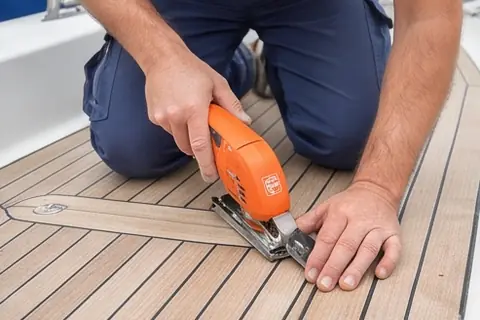
Teak is the most prized wood in the marine world; its natural oil content gives high resistance to water and rot. Neglected teak turns grey, its surface roughens and it begins to delaminate. Clean regularly with a soft brush and fresh water. Avoid stiff brushes and pressure washing – they tear the fibres. Apply teak oil at the start and middle of each season (clean, dry, apply thinly, leave 20 minutes, wipe ). UV-filtered spar varnish provides more durable protection but requires more effort: sand, de-dust and apply multiple coats. Two-stage teak cleaners (cleaner + brightener) restore greyed or stained surfaces.
Vinyl upholstery maintenance
Marine-grade vinyl on seating is UV, salt and moisture resistant but hardens, cracks and fades without care. Rinse with fresh water after use. Weekly cleaning with pH-neutral cleaner (not household bleach or detergents). Apply a UV-protective cream or spray after each clean to slow fading and cracking. Treat mould stains with a mould remover, then dry thoroughly and improve cabin ventilation.
Fabric maintenance
Acrylic canvas (Sunbrella-type) is UV and moisture resistant; clean light dirt with a brush and fresh water, stubborn stains with warm water and mild soap soaked for 15 minutes. Renew water repellency each season with a fabric guard spray. Remove cushions and pillows for winter storage or stand them on edge for air circulation.
Fiberglass and plastic interior
Lockers, worktops, shower enclosures and WC linings are generally fiberglass or ABS. Use liquid cleaner and a soft sponge – no abrasive powder. Apply rubbing compound to yellowed fiberglass surfaces, then protect with wax.
Metal fittings
Clean stainless steel handles, hinges and slides regularly with a stainless cleaner to prevent tea staining. Polish brass and bronze fittings or preserve the patina with protective varnish.
Fighting damp and mould
Most interior damage on a boat starts with moisture. Condensation forms on cold hull sides and under mattresses, and mould follows within weeks in a closed boat.
- Ventilate. Leave vents open, fit solar-powered extractor fans for the months the boat is closed, and lift cushions on end before you leave.
- Use a dehumidifier when the boat is on shore power, with its drain led to a sink or a sealed container.
- Put a breathable layer under mattresses. A three-dimensional spacer mat lets air flow under the mattress and stops the black patches that appear on the underside.
- Find the leaks. A damp locker usually means a leaking deck fitting, a window seal or a chainplate. Fixing the source is cheaper than cleaning mould every season.
Cleaning mould safely
Use a cleaner made for mould on boat fabrics and vinyl, follow the dilution on the label and test on a hidden area first. Strong bleach can weaken stitching, fade fabric and harm varnish. Ventilate well while cleaning, wear gloves and let everything dry fully before closing the boat again.
Varnished wood inside
Interior varnish lasts many years if it is kept clean and out of direct sun. Wipe it with a damp cloth and a mild soap, dry it, and touch up scratches before water gets under the varnish and turns the wood grey. Around hatches and windows, where sunlight and drips hit the wood, plan a light sand and new coats every few seasons.
Leather and leather-look seats
Real leather needs a cleaner and conditioner made for leather; the salt in sea air dries it out. Synthetic marine vinyl is cleaned with a mild soap solution and a soft brush, then rinsed with fresh water. Avoid solvent cleaners and household sprays with silicone, which can make vinyl brittle over time.
Seasonal checklist
- Remove cushions and bedding for the winter if the boat stays closed, or stand them on edge.
- Wash removable covers at the temperature on the label and dry them completely.
- Check zips and replace corroded ones with plastic marine zips.
- Clean and protect plastic windows with a cleaner made for them; ordinary glass cleaner can craze acrylic.
- Note the jobs in your maintenance log so nothing is forgotten in spring.
Read next
Reader ratings
No ratings yet. Was this useful? Rate it and add what you know: corrections and first-hand tips help the next reader.
★ Rate this guide
Suggest a correction
Cite this page
Boat furniture and upholstery maintenance guide: teak, leather, fabric and plastic. Boat Almanac, updated 25 October 2026. https://boatalmanac.com/articles/boat-furniture-and-upholstery-maintenance-guide-teak-leather-fabric-and-plastic/ (accessed 21 November 2026).