Published · Updated Boat AlmanacHow guides are checked
The pleasures of boat ownership are difficult to overstate. The expenses are remarkably easy to underestimate.
There are few things more appealing than the idea of owning a boat.
You picture quiet anchorages, long lunches in secluded bays, a glass of something cold at sunset and the sort of freedom that is difficult to find on land. No traffic jams. No crowded beaches. No need to explain yourself to anyone.
Just the sea, the wind and the horizon.
It is an excellent arrangement, at least in theory.
In practice, there is also the marina invoice.
Boat ownership has a particular talent for combining extraordinary pleasure with quite ordinary financial distress. You can spend the morning swimming in turquoise water and the afternoon wondering why a small rubber component costs more than a respectable dinner for two.
The coast is beautiful. The cost is brutal.
And yet, strangely, we keep buying boats.
1. The Purchase Price Is Merely an Introduction
Every prospective boat owner begins with a budget. It may be €20,000 for a modest sailing yacht, €100,000 for something more comfortable, or considerably more for a vessel equipped with air conditioning, a generator and enough teak to require its own forestry policy.
You find the boat. She looks magnificent in the photographs. The broker is reassuring. The owner says the engine runs beautifully, the electronics work perfectly and the vessel is ready to sail away.
You begin planning your first summer cruise.
Then comes the pre-purchase survey.
The is approaching the end of its service life. The batteries are tired. Two need replacing. There is evidence of an old repair, the engine history is incomplete, and the supposedly minor leak turns out to be rather more enthusiastic than advertised.
None of these findings necessarily makes the boat a bad purchase. Boats are complicated machines, and even well-maintained vessels require attention.
Nevertheless, your original budget has begun to look rather optimistic.
The purchase price, you discover, was not the total cost. It was the opening statement.
2. The Marina: A Very Expensive Parking Space
On land, parking is generally considered a minor inconvenience. At a marina, it can become a substantial annual commitment.
You are paying for a berth, access to facilities, security, water, electricity and the privilege of keeping your boat somewhere convenient.
Depending on the marina, the vessel’s length and the location, you may also be paying for one of the most attractive views available from a bill-paying position.
Mediterranean marinas are particularly good at making this arrangement feel reasonable. The weather is pleasant, the waterfront restaurants are inviting, and the harbour is full of boats that look as though they have never encountered a financial difficulty.
You begin to understand why.
There is, of course, an alternative: anchoring.
Anchoring can be wonderfully economical, provided you do not count the anchor, chain, windlass, , replacement parts, dinghy, and the occasional night spent checking whether the boat is still where you left her.
It is also worth remembering that not every anchorage is suitable in every condition, and local restrictions may limit where you can stay.
Still, the view is free.
Usually.
3. Maintenance: The Boat Is Never Entirely Finished
A house can go for years without demanding much attention beyond the occasional repair. A boat lives in a more hostile environment. Salt water, ultraviolet radiation, vibration, moisture and constant movement make sure of that.
Paint fades. Sealants deteriorate. Pumps fail. Hoses age. Metal corrodes. Electrical connections develop opinions of their own.
And the sea, despite its considerable charm, is not especially sympathetic to neglected equipment.
The difficulty is not that every boat is unreliable. It is that almost every boat contains enough systems to keep an owner occupied indefinitely.
You replace a battery and discover that the charger is overdue for attention. You service the engine and notice a leak nearby. You repair the leak and find that the surrounding woodwork has suffered.
It is rather like renovating an old house, except that the house is moving, the floor is occasionally underwater, and the nearest hardware shop may be on another island.
The sensible owner plans for maintenance.
The optimistic owner plans to finish maintenance.
The experienced owner knows better than to put a date on it.
4. The Small Part That Costs a Small Fortune
There is a special category of boat expenditure reserved for components that appear entirely insignificant.
A piece of hose. A seal. A plastic fitting. A switch that looks remarkably similar to one in a domestic hardware shop.
You ask how much it costs.
The supplier gives you the price.
You ask whether that includes the fitting.
It does not.
You ask whether the replacement is readily available.
It is available to order.
You ask how long delivery will take.
The answer is somewhere between Thursday and the next phase of your life.
Marine equipment is not invariably overpriced, and there are good reasons why some components must meet demanding standards. Corrosion resistance, reliability and safety matter.
But the marine market has a curious way of making ordinary objects feel like specialist engineering.
A length of hose becomes a marine hose. A light becomes a navigation light. A screw acquires a specification, a part number and a price that suggests it has attended an expensive private school.
You buy it anyway.
The alternative is often to leave the boat unfinished, which is a condition no boat owner can tolerate for long.
5. Doing It Yourself: The Economy of Unpaid Labour
Many owners discover that they can save a considerable amount of money by doing maintenance themselves.
This is true.
It is also true that the first attempt may require three visits to the chandlery, two instructional videos, a specialist tool and a conversation with someone who has been doing the job for thirty years.
The financial calculation is straightforward enough:
**Money saved = professional labour avoided − tools, materi
Read next
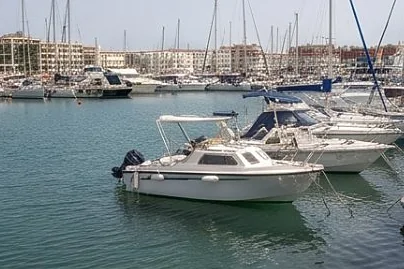 How Much Does It Really Cost to Own a Sailboat per Year?The question every first-time buyer asks after "how much is it?" should be "how much will…
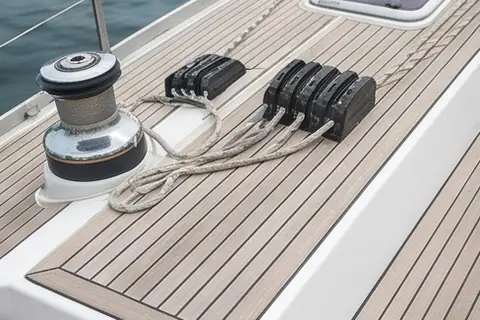 How Much Does It Cost to Live on a Sailboat? Real Monthly Numbers"How much does it cost?" is the first question people ask when they hear you live…
 How Much Does It Cost to Keep a Boat in the Mediterranean in 2026?Marina fees, maintenance, insurance, fuel and the expenses owners often overlook–an independent guide to the real…
Reader ratings ★ 5.0 (1 rating, 0 with words)
★★★★★ stars only
★ Rate this guide
Suggest a correction
Cite this page
The Coast Is Beautiful. The Cost Is Brutal.. Boat Almanac, updated 13 November 2026. https://boatalmanac.com/articles/the-coast-is-beautiful-the-cost-is-brutal/ (accessed 21 November 2026).