Published By Tuna Karslı, editorHow guides are checked
Few cruising grounds are as close together and as different as Greece and Turkey. On a clear day you can see one from the other, and many cruisers spend seasons moving between them. Each has its own charm, its own rules and its own costs. This comparison is meant to help you plan, not to pick a winner: plenty of sailors happily do both.
The cruising style
Greece offers hundreds of inhabited islands, each with a harbour town, a quay and tavernas. Cruising tends to be island-hopping between harbours and anchorages, with a strong village atmosphere.
Turkey offers a long, indented mainland coast with deep bays and gulfs, pine forests and ancient sites. Cruising tends to be bay-hopping, often anchoring with a line ashore, with restaurant jetties in many bays and modern marinas in the towns.
Paperwork for a foreign yacht
Greece
Greece is in the EU. EU-registered boats with EU VAT paid move freely; non-EU boats enter under temporary admission rules with time limits. Yachts need a transit document and must pay a cruising tax for boats above a certain length, charged by length and period. People are subject to the Schengen rules: many non-EU citizens can stay up to 90 days in any 180-day period across the whole Schengen area.
Turkey
Turkey is outside the EU and outside Schengen. Foreign yachts get a transit log on entry, usually arranged through an agent, and can stay in the country for an extended period. People enter with a passport and visa or e-visa where required, with Turkey’s own time limits. Our Turkey entry guide covers the details.
Why many cruisers use both
Because Turkey is outside Schengen, many non-EU cruisers spend part of the season in Turkey to manage their Schengen days, then return to Greece. Check your own nationality’s rules carefully: the details matter.
Moving between them
Each crossing between the two countries means clearing out of one and into the other at official ports of entry, with the right paperwork each time. It is routine but takes planning. Choose ports of entry on both sides that are close to each other to keep the crossing short.
Costs
Costs move with exchange rates, inflation and policy, so compare current figures rather than reputations. In broad terms:
- Marinas: both countries have a wide range, from simple municipal harbours to high-end marinas. Town quays in Greece are often inexpensive. Turkish marinas are generally well equipped, and prices vary greatly between regions.
- Anchoring: free in most places in both countries, with protected areas that have rules or fees.
- Fees: Greece has the cruising tax; Turkey has the transit log and agent fees.
- Haul-out and winter storage: both have good yards. Turkey has long been a popular place to winter and refit, with many experienced yards.
- Daily life: food and eating out are good value in many areas of both countries outside the busiest resorts.
Use our marina pages to compare current berth prices that sailors have shared.
Wind and weather
Both share the Aegean summer north wind, the meltemi, strongest in July and August. The central Greek islands are among its windiest areas. Turkey’s southern coast is generally lighter in summer. Shoulder seasons in both countries are often the most pleasant sailing of the year.
Anchorages
Greece has countless small bays, many near villages. Turkey’s deeply indented coast gives a very high density of well-sheltered bays, especially around the gulfs of the southwest. In both, holding varies from excellent sand to weed and rock. Our bay pages show shelter by wind direction and sailors’ notes on holding.
Wintering
Both countries have marinas with winter communities and yards for storage ashore. Factors to weigh: the cost of a winter contract, the community, the climate, flights home, and how your time limits as a person and as a boat fit the months you plan to spend.
Common questions
Can I cross between the two countries for a day trip?
Not casually. Each crossing requires clearing out and in at ports of entry, with the paperwork for the boat and the crew.
Which is better for a first-time charter?
Both have excellent charter bases. Greece offers island-hopping with short harbour-to-harbour legs; Turkey offers sheltered bays with less open water between them. Your choice may come down to the season and the wind.
Field notes
The cruisers who enjoy both most are the ones who plan their paperwork as carefully as their routes, and who keep a flexible schedule around the meltemi. Use the route planner for crossings and coastal legs, and our short itineraries for ideas in each area.
Read next
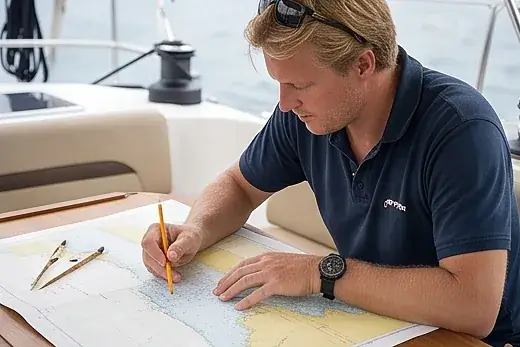 How to plan a sailing holiday: route, budget, crew and seasonA sailing holiday combines travel, adventure and a slower pace of life: waking up in a…
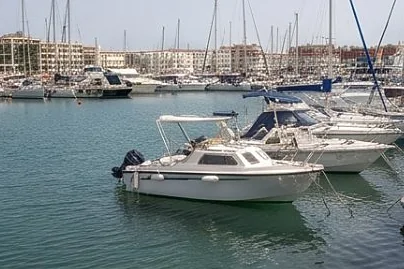 How Much Does It Really Cost to Own a Sailboat per Year?The question every first-time buyer asks after "how much is it?" should be "how much will…
 Provisioning for a Long Passage: What to Stock and How to Store ItOn a long passage, food is fuel, comfort and morale. A good galley can turn a…
Reader ratings
No ratings yet. Was this useful? Rate it and add what you know: corrections and first-hand tips help the next reader.
★ Rate this guide
Suggest a correction
Cite this page
Turkey vs Greece for Sailing: Costs, Rules and Anchorages Compared. Boat Almanac, updated 18 November 2026. https://boatalmanac.com/articles/turkey-vs-greece-for-sailing-costs-rules-anchorages/ (accessed 21 November 2026).