Insurance and paperwork
Insurance and papers matter most on the day something goes wrong, which is the worst day to discover a gap. Read the policy before you need it, and keep the papers where you can find them in a hurry.
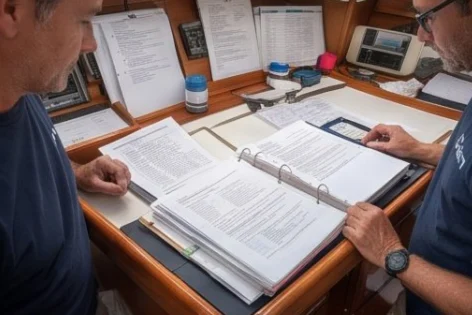
Insurance
- Read the cruising limits: the area and the dates. Many policies exclude the hurricane or cyclone belt in the storm season, or ask for a written storm plan, a special for named storms, or the boat ashore with tie-downs.
- Check what is covered ashore and during lifting, for crew and for third parties, and the excess.
- Some policies have a lay-up period during which the boat must be ashore or out of use; know your dates.
- Ocean passages may need declaring, with the number of crew.
- Tell the insurer about changes: a lithium battery bank, a new engine, a change of cruising area, a long passage.
- Keep photographs of the boat and equipment, and the invoices.
Papers on board
- Registration and proof of ownership, the insurance certificate, the radio licence, crew licences and passports, and the clearance papers from the last port.
- A crew list, the ship's stamp if you use one, and copies of everything, stored separately from the originals.
- Keep the expiry dates in one place with reminders; see the document tracker.
Crossing borders
- Read the entry rules a few months before each country: advance notice, cruising permits, biosecurity, visas.
- Fly the on arrival until cleared, and the of the country.
- Keep the clearance from each port: the next country usually asks for it.
If something happens: the claim
- First make people and the boat safe; then stop further damage (insurers expect you to do what you reasonably can to limit the loss).
- Photograph everything before anything is moved or repaired, and write down what happened while it is fresh: times, positions, weather, witnesses.
- Tell the insurer as soon as you can, and ask before you commit to repairs, unless the work is urgent to save the boat.
- Do not admit liability to another party; exchange details and let the insurers talk.
- A tow is not the same as salvage: if someone offers help, agree the terms before you take a line if you can, and speak to your insurer before signing a salvage agreement.
- Keep every receipt; the insurer's surveyor will want to see the damage and the bills.
Seasonal timing
- Northern temperate waters
- Renew insurance and check the cruising limits before the season; declare the lay-up dates.
- Southern temperate waters
- The same, six months later.
- The tropics
- Before the storm season, agree the storm plan with the insurer in writing; before the sailing season, check the area limits for where you are going.
Tips from experience
- Read the exclusions first, then the cover.
- Ask the insurer to confirm unusual plans in writing.
- Keep scans of every document in the cloud and on paper.
- Set reminders three months before each expiry.
- Photograph the boat and equipment every year.
- Keep receipts for equipment you buy.
- Know the excess you would pay for a storm claim.
- Check the crew rules for ocean passages.
What it usually costs depends on
- The boat's value and age.
- Cruising area and season.
- Your experience and claims history.
- The excess you choose.
- Storm-season cover in the tropics.
Ask for written quotes locally: prices differ a great deal between countries, harbours and seasons.
Common mistakes, and the lesson from each
- ❌ Sailing outside the policy's area or dates. Read the cruising limits before you plan; ask for an extension in writing.
- ❌ Not telling the insurer about a change. An undeclared change can void a claim.
- ❌ Papers expiring during a voyage. Put every expiry date in one calendar with reminders, months ahead.
- ❌ Originals and copies stored together. Keep copies separately, and scans online.
- ❌ No storm plan in the tropics. Many insurers ask for one; agree it before the season.
- ❌ Losing the last port clearance. The next country asks for it. Keep every one.
- ❌ Assuming the boat is covered ashore. Check cover during lifting and on the hard.
- ❌ No photographs or receipts. A claim without evidence is slow and smaller.
Go deeper
← The Skipper's Handbook · ‹ Crew and life aboard · The rules that apply to a yacht ›
General guidance from experience, not instructions for your boat: follow the maker's manuals and ask a qualified professional for work you are not sure of.