Published · Updated By Tuna Karslı, editorHow guides are checked
Buying a boat without a survey is like buying a house without looking in the loft. A pre-purchase survey is an independent, detailed inspection of the boat’s condition, carried out for you, the buyer. It tells you what you are buying, what needs attention soon, and what it may cost. It is also what your insurer and often your lender will ask for.
Types of survey
- Pre-purchase (condition and valuation) survey: the full inspection for a buyer, usually with the boat ashore and a .
- Insurance survey: a shorter inspection to confirm the boat is insurable, often requested for older boats.
- Damage survey: after an incident, for insurers or owners.
What a pre-purchase survey covers
Hull, ashore
- Visual inspection of the hull for damage, repairs, cracks and blisters.
- Percussion sounding with a phenolic hammer to find and voids.
- Moisture readings in a pattern across the hull, compared with dry reference areas. For meaningful readings, the boat should have been out of the water and drying for at least a week.
- and keel bolts, signs of grounding, the keel-to-hull joint.
- Rudder, rudder bearings and stock, propeller, shaft, cutless bearing, P-bracket or saildrive.
- Through-hulls and , anodes.
Deck and structure
- Deck for soft spots and core moisture, especially around fittings.
- Hull-to-deck joint, stanchions, guardrails, pulpits, cleats and hatches.
- Internal structure: bulkheads, floors, stringers, chainplate attachments.
Rig and sails
- Visual check of standing and running from deck level, terminals, chainplates, spreaders as far as visible. A full aloft rig inspection is often a separate service by a rigger.
- Sails as available, furlers and winches.
Systems
- Engine: visual condition, leaks, mounts, belts, hoses, exhaust, cooling, fuel system, starting and running at the sea trial, with temperature checks. Engine compression and blow-by tests are usually outside a standard survey and are done by an engine specialist if needed.
- Electrical: batteries, wiring standards, protection, shore power, charging.
- Gas installation, fresh water, toilets and holding tanks.
- Safety equipment: fire extinguishers, life-saving equipment, pumps, navigation lights.
- Electronics, as far as they can be powered and tested.
Sea trial
Engine under load, steering, handling, noises and vibration, instruments and, on sailboats, sailing if conditions allow.
What is usually outside the survey
- Dismantling: the surveyor does not take apart the engine, remove fixed panels or cut into structures.
- Hidden areas behind fixed linings or tanks.
- Oil analysis, engine compression and blow-by tests, unless arranged with a specialist.
- Detailed rig inspection aloft, unless agreed.
- Legal checks of ownership, debts and tax status: these are for your broker, lawyer or registry.
Ask what is included before you book, and add specialist checks for anything that matters on this boat.
How findings are presented
Most reports rank findings by urgency. A common system uses three grades:
- A: safety items or structural concerns that need attention before using the boat.
- B: items that should be dealt with soon, within the season.
- C: maintenance and cosmetic notes, for the owner’s list.
A thorough report on a cruising boat can run to dozens of pages with photos, and usually arrives within two to three working days after the inspection.
How to prepare
- Book the haul-out with the seller’s agreement, early enough for the hull to dry before moisture readings.
- Ask the seller to have the boat accessible: lockers emptied, batteries charged, engine cold for the start, fuel and water aboard for the sea trial.
- Be there if you can. Walking round the boat with the surveyor teaches you a great deal about your future boat.
Using the report
The report is a negotiation tool. Get estimates for the A and B items from a yard and discuss price or repairs with the seller on that basis. Read our checklist of 15 things to check before a deposit as well, and ask surveyors for quotes in the area where the boat lies.
Common questions
How much does a survey cost?
It depends on the boat’s length and type, the location and what is included. Ask several surveyors for a quote and compare the , not just the price.
Can I use the seller’s recent survey?
It is useful background, but it was done for someone else and at another time. A buyer’s own survey is the one you can rely on and the one your insurer will usually want.
Field notes
Choose your own surveyor, independent of the seller and broker. A good surveyor is on your side and explains what matters and what does not. Keep the report: it becomes the starting point for your maintenance plan and is useful when you sell.
Read next
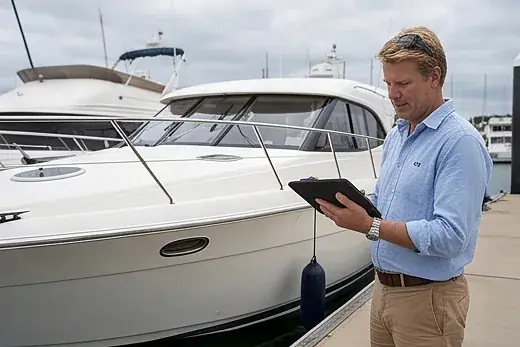 Second-hand boat valuation guide: how to determine the market priceWhy boat valuation matters Whether you are buying or selling, a realistic price is the basis…
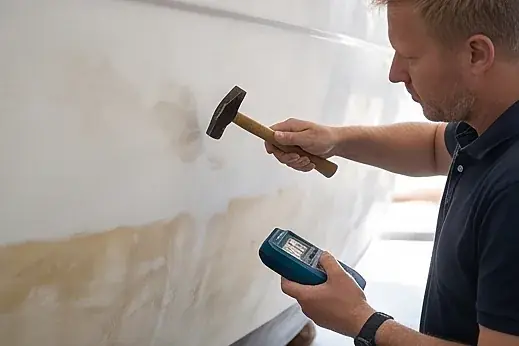 Boat Survey Guide: When You Need One and What to ExpectBuying a used boat without an independent survey is one of the most common and most…
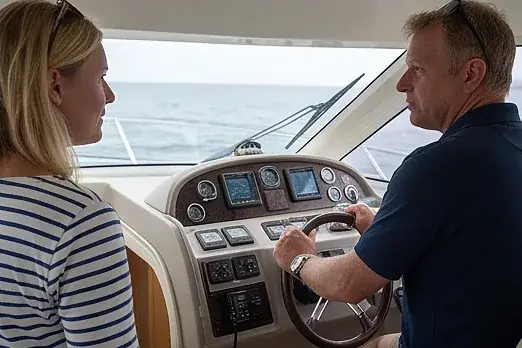 Sea trial guide: what to check, inspection checklistWhat is a sea trial? A sea trial is a test passage that shows how a…
Reader ratings
No ratings yet. Was this useful? Rate it and add what you know: corrections and first-hand tips help the next reader.
★ Rate this guide
Suggest a correction
Cite this page
What Does a Marine Survey Cover? A Buyer’s Checklist. Boat Almanac, updated 18 November 2026. https://boatalmanac.com/articles/pre-purchase-survey-guide-why-it-matters-what-it-covers-and-how-to-use-the-findings/ (accessed 21 November 2026).