🥗 Food and healthy eating aboard
What the crew eats decides how the crew sails. Tired, dehydrated, under-fed people make the mistakes that turn a rough night into a bad one. Good food aboard is not luxury: it is planning, a few simple habits and a that works when the boat is heeled and moving. The aim is meals that are easy to make in bad weather, keep people warm and steady, and stay balanced over weeks with no shop in sight.
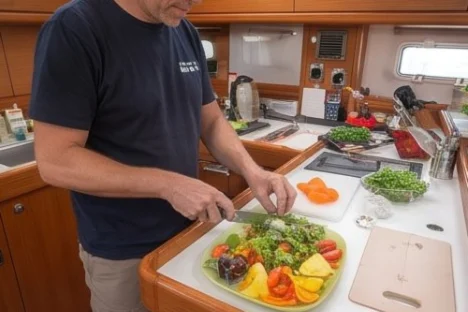
A balanced plate, the sailor's way
Over a few days anything goes; over weeks the diet matters. Every day, aim for:
- Something filling: rice, pasta, potatoes, bread, oats, couscous, lentils. Slow carbohydrates keep the watch going through the night.
- Protein: eggs, tinned fish, tinned or vacuum-packed meat, cheese, beans, chickpeas, nuts, fish you catch. Protein at breakfast and at the start of the night watch keeps people alert.
- Fruit and vegetables every day, fresh while they last, then tinned, dried and pickled. Cabbage, onions, carrots, potatoes, squash, apples and citrus keep longest.
- Fat in moderation: olive oil, nuts, cheese. In cold climates people need more; in the heat, less.
- Salt and fluids: in the tropics and on hard passages people sweat more than they notice.
Plan the main meal so it can be eaten from a bowl with a spoon. On a passage, one hot meal a day and easy food in between is better than three ambitious meals nobody can face.
Provisioning for a passage
- Write a menu, then a list. Count meals, not items: days at sea, plus a third more for calms, breakages and a diversion. For an ocean crossing, many crews carry food for twice the expected time in long-life stores.
- Cook the first two or three days ahead: a stew, a pasta sauce, a curry, frozen or in sealed boxes. The first days at sea are when everyone is least hungry and least able to cook.
- Snacks within reach of the : nuts, crackers, dried fruit, chocolate, muesli bars. Night watches run on them.
- One "storm meal" that needs only boiling water, ready in a known locker.
- Buy local where you arrive. Markets in the islands are seasonal and some goods (flour, cooking gas, dairy) can be scarce or expensive; stock up where it is easy, and carry what is precious to you.
Keeping fresh food without a big fridge
- Buy fruit and vegetables that have never been refrigerated (a market, not a supermarket chiller): they keep far longer at cabin temperature.
- Unwashed eggs that have never been chilled keep for weeks in a cool place; turn the box every few days.
- Store vegetables dry, in the dark, with air around them: nets, baskets or open boxes, not sealed plastic. Check every day and use anything that starts to turn first.
- Wrap each piece of fruit and hard vegetable in paper; keep apples and bananas away from the rest (they ripen everything near them).
- Cabbage keeps longest of all: peel off the outer leaves as they go, the heart stays good.
- Hard cheese, salami and cured meat keep without a fridge if wrapped in cloth and kept cool.
- Sprout seeds and lentils in a jar for something green on day twenty.
- Open the fridge as rarely as possible and know what is where before you open it.
Cooking at sea safely
- A gimballed stove with pot clamps or fiddles, and a strap or bar for the cook to lean against.
- Wear long trousers and an apron when cooking underway: most serious burns aboard are boiling water spilled into the lap.
- Fill pots only half full; use a pressure cooker or a deep pot with a lid.
- Turn off the gas at the tank or the solenoid after every use, have a gas alarm low in the boat, and know where the fire blanket is.
- In rough weather, change course or slow down for ten minutes while the meal is cooked and served. It is the skipper's call, and a good one.
Water and hydration
Thirst comes late, especially in wind, sun and seasickness. Make drinking a routine: a bottle per person, filled at the start of each watch. Dark urine and headaches are warning signs. In the tropics people need several litres a day; plan the drinking water separately from the washing water and keep an emergency supply in sealed bottles that is never touched.
Fishing, and the fish you should not eat
A line astern provides fresh food on most ocean passages. Bleed and gut the fish at once and keep it cold. In tropical waters, ciguatera is a real risk: a toxin from reef algae builds up in large reef predators (barracuda, some groupers, snappers, moray eels and others). It cannot be smelled, tasted, cooked or frozen out. Ask local fishermen which fish are safe on that reef, and as a rule eat open-ocean fish (tuna, mahi-mahi, wahoo) rather than big reef fish. Respect local fishing rules and protected areas; many countries need a licence.
Seasonal timing
- Northern temperate waters
- In the season, markets are full and cheap: stock dry goods before the end of the season when many island shops close or cut their range.
- Southern temperate waters
- The same, six months on: provision well before the southern winter if you are leaving for the tropics.
- The tropics
- In the storm or monsoon season some islands are supplied less often; in remote places supply ships set the rhythm, so ask when the boat comes.
Tips from experience
- Label the tops of tins with a marker: labels come off in a damp locker.
- Keep a simple stock list of what is where, and cross off as you eat.
- A thermos of hot water at the start of each night means tea and soup without lighting the stove.
- Freeze water bottles before a passage: they keep the fridge cold and become drinking water.
- Carry spices: a dull long-life meal becomes a good one with a little curry, chilli or herbs.
- Eat the most perishable food first, and plan the menu around what is going off, not what you feel like.
- Bake bread at sea in a pressure cooker or a pan if there is no oven.
- Keep a few treats hidden for the hard night of the passage.
- A cruiser's rule in remote places: buy it when you see it. The shop may not have it again for weeks.
What it usually costs depends on
- Where you buy: big towns and supermarkets on the way are far cheaper than small islands.
- How much you eat ashore.
- Imported goods in remote places (often several times the mainland price).
- Fridge and freezer capacity, and the energy to run them.
Ask for written quotes locally: prices differ a great deal between countries, harbours and seasons.
Common mistakes, and the lesson from each
- ❌ Planning ambitious meals for the first days at sea. Nobody wants to cook while finding their sea legs. Cook ahead and keep it simple.
- ❌ Buying refrigerated fruit and vegetables for a long passage. Chilled produce rots quickly at cabin temperature. Buy from markets, unchilled.
- ❌ Storing vegetables in sealed plastic bags. They sweat and rot. Keep them dry, dark and aired.
- ❌ Forgetting to drink on a windy, cool day. Dehydration sneaks up when you do not feel hot. Drink by routine, not by thirst.
- ❌ Cooking in shorts in a seaway. A pot of boiling water in the lap is a serious burn far from help. Trousers and an apron, always.
- ❌ Eating a big reef fish on a tropical atoll without asking. Ciguatera can make people very ill for weeks. Ask the locals; eat open-ocean fish.
- ❌ Running out of one thing everyone relies on (coffee, cooking gas, flour). Keep a reserve of the few things that make the crew happy and the galley work.
- ❌ No food you can eat with one hand. In bad weather, snacks and a thermos are the meals. Plan them.
- ❌ Provisioning only for the expected time. Calms, breakdowns and diversions happen. Carry a good margin of long-life food.
Go deeper
- Galley, food storage and gas safety
- Gas system and galley safety
- Water and watermaker calculator
- Route planner (provisions list)
- Watch schedule
← The Skipper's Handbook · ‹ Piracy and security · First aid and medical care at sea ›
General guidance from experience, not instructions for your boat: follow the maker's manuals and ask a qualified professional for work you are not sure of.