Piracy and security
For most cruisers the security risk is small and ordinary: a dinghy or stolen from a dock at night, a phone taken from a . In a few areas armed robbery or piracy is a real threat, and the situation changes from year to year. Good habits deal with the first; good information and route planning deal with the second. This page is general: always read the current advice for the area before you go.
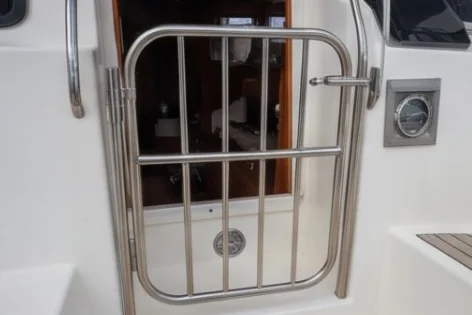
The everyday risk: theft
- Lift the dinghy out of the water at night (on davits or a ) and lock the outboard to the boat. Dinghy theft is the most common crime cruisers meet.
- Lock the boat when you go ashore, and do not leave valuables in the cockpit.
- A light in the cockpit and a cheap motion alarm deter most opportunists.
- Ask other cruisers and the marina which anchorages have had trouble lately.
Areas that need special care
Situations change, so treat this as a list of places to check, not a map of danger. In recent years the main concerns for yachts have included the Gulf of Aden, the southern Red Sea and the Somali basin; the Sulu and Celebes Seas (kidnapping risk); parts of the coast of Venezuela and the waters between Venezuela and Trinidad (armed robbery); and the Gulf of Guinea in West Africa. Several governments publish travel advice for each; read your own government's advice and the maritime security reports before planning a route through them.
Reporting schemes and sources
- UKMTO (United Kingdom Maritime Trade Operations) runs a voluntary reporting scheme for vessels in the Red Sea, the Gulf of Aden, the Arabian Sea and parts of the Indian Ocean, and publishes alerts.
- MSCHOA (the EU naval force's Maritime Security Centre, Horn of Africa) registers vessels transiting the area.
- ReCAAP reports on piracy and armed robbery in Asia, and the IMB Piracy Reporting Centre keeps a worldwide live map and a 24-hour line.
- Register before you enter an area covered by a scheme, report as asked, and keep the contact numbers by the radio.
If you are boarded
- Your life matters more than anything on board. Do not resist armed robbers.
- Stay calm, keep your hands visible and do what you are told; give them what they ask for.
- When they have gone, check everyone, then report to the coastguard or MRCC, the reporting centre for the area and the local police, and warn other boats on the radio.
Planning a passage through a risk area
- Read the current advice and the latest incident reports, and talk to crews who have just made the passage.
- Consider the alternative: many cruisers now choose a longer route (round the Cape of Good Hope instead of the Red Sea) when the advice is bad.
- Follow the current advice on use and lights; it has changed over the years.
- Travel with other boats where that is recommended, and agree radio schedules.
- Keep copies of passports and boat papers somewhere separate, and a list of serial numbers.
Seasonal timing
- Northern temperate waters
- Check the advice before each season; the situation can change in months.
- Southern temperate waters
- The same in the southern season.
- The tropics
- In monsoon areas, the seasons that make passages possible are also when most yachts transit: read the reports for that season.
Tips from experience
- Lift the dinghy at night, every night, everywhere.
- Keep a list of serial numbers and photos of your gear.
- Ask the local cruisers' net about recent incidents.
- Do not post your exact position and plans publicly in a risk area.
- Lock the companionway when everyone is ashore.
- A spare cheap phone and wallet can satisfy a thief.
- Register with the reporting scheme before you enter its area.
- Your insurance may exclude some areas: check before you go.
What it usually costs depends on
- Locks, a dinghy lifting system and alarms.
- Whether your insurer excludes or surcharges some areas.
- A longer route to avoid an area.
Ask for written quotes locally: prices differ a great deal between countries, harbours and seasons.
Common mistakes, and the lesson from each
- ❌ Leaving the dinghy in the water overnight. It is the most stolen thing in cruising. Lift it every night.
- ❌ Planning a route through a risk area on old advice. Situations change. Read the current advice and recent reports.
- ❌ Resisting armed boarders. Nothing on board is worth a life. Comply, then report.
- ❌ Not registering with the reporting scheme. In covered areas, registration means someone knows you are there.
- ❌ Posting live positions online in a risk area. Share your track with people ashore privately instead.
- ❌ Assuming a marina is always safe. Lock up there too; theft happens in marinas.
- ❌ No copies of papers and passports. Keep copies and scans apart from the originals.
- ❌ Ignoring insurance exclusions. Some policies exclude piracy areas. Read the cruising limits.
Go deeper
← The Skipper's Handbook · ‹ Communications at sea · Food and healthy eating aboard ›
General guidance from experience, not instructions for your boat: follow the maker's manuals and ask a qualified professional for work you are not sure of.