Published · Updated By Tuna Karslı, editorHow guides are checked
Consistent, well-timed maintenance keeps a boat safe, reduces breakdowns at sea, protects its resale value and keeps insurers satisfied. Most problems that end a cruise, a failed , a seized , a flat battery, a blocked fuel filter, are cheap to prevent and expensive to fix in a hurry. This guide organises the year into pre-season preparation, in-season checks, haul-out and winter lay-up, with a month-by-month calendar for a typical Mediterranean season, practical procedures for the jobs owners do most often, and the mistakes that cause the most damage.
The year at a glance
The calendar below assumes a Mediterranean or Turkish season with launching in spring and haul-out in late autumn. Adjust the months to your own climate and use.
| Period | Phase | Main tasks |
|---|---|---|
| January–February | Lay-up | Battery maintenance charging, ventilation checks, order parts, book yard slots, service and inflatable lifejackets |
| March | Pre-season, ashore | Hull inspection, , anodes, seacocks, cutlass bearing, stern gland, propeller |
| April | Pre-season, launch | Engine service, fuel system, electrics, rig inspection, safety equipment, launch and |
| May–October | In season | Pre-departure checks every trip; monthly checks; mid-season engine oil change if hours demand it |
| November | Haul-out | Lift, pressure wash, inspect underwater hull, moisture readings once dry |
| December | Winterising | Engine and water system lay-up, sails and canvas off, covers and ventilation |
Pre-season (March–April)
Hull and underwater gear
- Antifouling. Wash the hull, sand back loose or flaking antifouling, and apply fresh coats compatible with the existing system. Observe the manufacturer’s minimum and maximum overcoating and launch times; launching too soon is a common cause of early failure.
- Topsides. Inspect the for oxidation, crazing, stress cracks and chips. Compound and polish where needed, then wax.
- Propeller and shaft. Check for blade damage, check the shaft for play in the cutlass bearing, and check the propeller nut and locking device.
- Stern gland or shaft seal. Repack a traditional gland or inspect a lip or face seal according to the maker’s schedule.
- Seacocks and through-hulls. Operate every valve through its full range, and check hose clamps (double-clamp below the waterline) and hoses for cracking or softening.
- Anodes. Replace any that is around half consumed. See the anode section below.
Engine
- Change engine oil and oil filter, and gearbox or saildrive oil, at the intervals in the engine manual.
- Replace the primary water-separating fuel filter and the engine-mounted secondary filter; bleed the fuel system.
- Inspect the raw-water impeller and replace if vanes are cracked, set or missing; carry a spare.
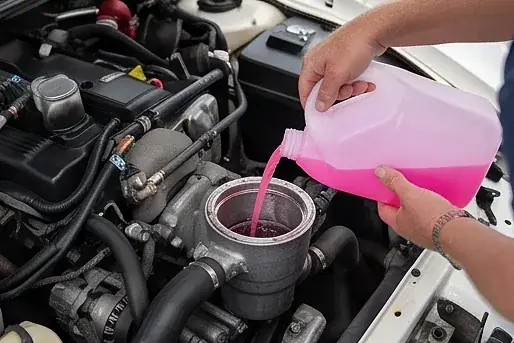
- Check belts for tension and wear, hoses for cracking, and the coolant level and condition.
- Clean the raw-water strainer and check the lid seal.
- Check engine mounts for cracked rubber and loose fixings.
- Inspect the exhaust elbow and the wet exhaust hose; corroded mixing elbows are a frequent cause of overheating.
Fuel system
- Inspect fuel lines for cracking or chafe, and the tank vent for blockage.
- Drain water from the bottom of the primary filter bowl and check for signs of diesel bug (dark slime or sludge).
- Check the fuel shut-off valve operates.
Electrics and batteries
- Check battery state of charge and condition; clean and grease terminals.
- Test the pumps, float switches and high-water alarm.
- Test navigation lights, anchor light and deck lights.
- Inspect the shore power inlet and lead for heat damage and corrosion.
- Check that the battery isolation switch and main fuses are accessible and marked.
Electrical work on boats is covered by recognised standards such as ABYC E-11 (AC and DC electrical systems on boats) and the ISO 13297 and ISO 10133 series for small craft. If you are adding or altering circuits, follow them, or have the work done by a qualified marine electrician.
Rig, sails and deck
- Inspect standing rigging terminals for cracks, broken strands and corrosion; check split pins and tape.
- Check running rigging, blocks and sheaves for wear.
- Inspect sail stitching, UV strips and battens before bending on.
- Check deck fittings, stanchions and guardwires for movement and leaks.
Safety equipment
- Lifejackets: inflate orally to check for leaks, check gas cylinders and auto-inflation heads, and replace expired parts.
- Fire extinguishers: check gauges and service dates, and shake dry powder units.
- Flares and distress signals: check expiry dates.
- Liferaft: confirm the service date with the authorised service station.
- EPIRB or PLB: check battery and registration dates; carry out the self-test.
- First aid kit: restock and check dates.
- In Turkey, check the boat carries the minimum safety equipment required for private boats under the 2026 private boat regulation (Annex 2), scaled to the boat’s length.
In-season checks (May–October)
Before every departure
- Engine oil and coolant levels
- Bilge dry and clean; bilge pump switch on automatic
- Fuel level and water separator bowl
- Battery voltage
- Seacocks in the correct positions; engine raw-water seacock open
- Navigation lights working if you may be out after dark
- Safety equipment accessible and lifejackets for everyone aboard
- Check cooling water is coming out of the exhaust once the engine is running
Monthly
- Test the bilge pump manually and clean around the float switch.
- Clean the raw-water strainer.
- Look over running rigging for chafe, especially at fairleads and sheaves.
- Check the engine mounts, shaft coupling and stern gland for leaks or vibration.
- Check the anchor windlass, chain and connecting shackle; mouse the shackle.
- Have the hull cleaned or inspected by a diver if growth is heavy.
- Pump out holding tanks only at authorised facilities and keep the receipts; in Turkey these are recorded through the DAU (Maritime Waste Application) system.
Haul-out
Haul the boat at least once a year. It is the only chance to inspect the underwater hull, propeller, shaft, cutlass bearing, rudder bearings, keel joint and through-hulls properly.
- Give the yard accurate data. The travel lift operator needs the boat’s weight, length, draft and the positions of slings relative to the shaft, log and depth transducers. Mark sling points on the toe rail if they are not already marked.
- Wash immediately. Pressure wash the hull as soon as it is out of the water, before growth dries hard.
- Inspect while fresh. Look for blisters, cracks around the keel joint, damage to the leading edge of the keel and rudder, and rudder bearing play.
- Check support. Make sure the keel is carrying the weight on blocks and the stands are only stabilising, with chains or ties between stands.
- Moisture readings. Readings taken straight after lifting are meaningless. Let the hull dry ashore for at least a week, longer if you are investigating osmosis, then take readings with a calibrated moisture meter in a grid pattern above and below the waterline for comparison.
Gelcoat repair
- Clean and degrease the damaged area with acetone or a suitable solvent.
- Open up the chip or scratch slightly with a small rotary tool to give a mechanical key and remove loose material.
- Mix gelcoat with the specified amount of catalyst, and tint to match; test the colour on a hidden area first.
- Apply slightly proud of the surrounding surface.
- Cover with release film or use a waxed gelcoat so that it cures fully without air inhibition.
- Once cured, sand back with progressively finer grits and polish to blend.
Colour matching is the hardest part on older, faded gelcoat. Star cracks around fittings usually indicate flexing beneath; repairing the surface without addressing the cause means the cracks return.
Osmosis
Osmotic blistering in glass-reinforced plastic hulls develops when water passes through the gelcoat and reacts with water-soluble materials in the laminate, creating pressure that forms blisters. A full treatment typically involves:
- confirming the diagnosis with moisture readings and by opening sample blisters;
- removing antifouling, then grinding or peeling the gelcoat back to sound laminate;
- washing the laminate to remove soluble residues and drying it thoroughly, which can take months on a badly affected hull, with moisture monitored throughout;
- applying an epoxy barrier coat system to the manufacturer’s film thickness;
- re-applying antifouling.
A few small, dry blisters do not always justify full treatment. Get an independent assessment before committing to a major and expensive job.
Teak decks
- Clean with a purpose-made teak cleaner and a soft brush, working across the grain gently, then rinse well.
- Avoid wire brushes, hard scrubbing and pressure washers, which strip the soft grain and shorten the deck’s life.
- Protect with a teak oil or sealer if you prefer the golden colour; left untreated, teak weathers to silver-grey without harm.
- Inspect the caulking seams. Lifted or split caulking, and loose or missing plugs over fastenings, let water into the substrate beneath.
- Measure remaining teak thickness when replugging; a deck worn thin is approaching replacement.
Anodes
Sacrificial anodes protect the propeller, shaft, saildrive leg and other underwater metals from galvanic corrosion by corroding in their place.
| Water | Anode alloy | Notes |
|---|---|---|
| Salt water | Zinc or aluminium alloy | Magnesium corrodes too quickly in seawater |
| Fresh water | Magnesium | Zinc and aluminium become passive and stop protecting |
- Replace anodes when around half consumed, and at every haul-out if in doubt.
- Never paint an anode; paint stops it working.
- Ensure good metal-to-metal contact; clean the mounting surface before fitting.
- Anodes that disappear unusually quickly point to a stray-current or bonding problem worth investigating.
- Anodes that look untouched after a season may not be connected electrically.
Winter lay-up
- Engine. Change oil and filter so acidic used oil does not sit in the engine over winter. Flush the raw-water circuit with fresh water and, where frost is possible, with a suitable antifreeze. Check coolant strength in a closed-circuit system. Remove the impeller or leave it lubricated as the maker recommends.
- Fuel. Many owners fill the diesel tank to reduce air space and condensation, and add a biocide if diesel bug has been a problem. Replace the fuel filters.
- Water system. Drain tanks, pipework, water heater and pump. Where frost is likely, protect the system with an antifreeze approved for potable water systems.
- Batteries. Keep them charged with a suitable maintenance charger or charge them regularly; a battery left discharged over winter sulphates and loses capacity.
- Sails and canvas. Remove, rinse, dry and store them, or send them for service.
- Cover and ventilation. Cover the boat to keep out rain and UV, but keep air moving. A sealed cover traps moisture and promotes mould. Leave vents open and use covers designed for ventilation.
- Heads and holding tank. Pump out at an authorised facility, flush and drain.
Common mistakes
- Launching before antifouling has cured.
- Leaving seacocks untouched until they seize.
- Skipping the impeller change to save a small part, then overheating the engine.
- Painting over anodes.
- Taking moisture readings straight after lifting.
- Pressure washing teak decks.
- Wrapping the boat in a sealed cover with no ventilation.
- Leaving batteries discharged over winter.
- Keeping no maintenance log; insurers and buyers both value one.
Keep a maintenance log
Record the date, engine hours, work done, parts used and who did it. A complete log supports insurance claims, helps diagnose recurring faults and makes the boat easier to sell. Keep invoices and photographs of hidden areas taken during haul-out.
Sources
Read next
 The 5 Stages of Winter Lay-Up Denial: Why We All Pretend We’re Going to “Work on the Boat Every Weekend”Let’s talk about the biggest, most widely accepted collective delusion in the entire maritime world: The…
 Wintering a yacht in Turkey: marinas, haul-out, costs, paperworkTurkey has become one of the most popular places in the Mediterranean to lay up a…
 How to Winterize a Sailboat in the MediterraneanWinterizing in the Mediterranean is different from winterizing in northern Europe or North America. Frost is…
Reader ratings
No ratings yet. Was this useful? Rate it and add what you know: corrections and first-hand tips help the next reader.
★ Rate this guide
Suggest a correction
Cite this page
Annual boat maintenance calendar: pre-season, in-season and haul-out. Boat Almanac, updated 24 October 2026. https://boatalmanac.com/articles/annual-boat-maintenance-calendar-pre-season-in-season-and-haul-out/ (accessed 21 November 2026).