Published · Updated By Tuna Karslı, editorHow guides are checked
What is galvanic corrosion?
When dissimilar metals make contact in an electrolyte such as salt water, the electrochemical potential difference between them causes one metal to corrode preferentially, protecting the other. This is galvanic corrosion. A boat carries many dissimilar metals in close proximity, bronze propeller, stainless steel shaft, aluminium drive unit, steel trim tabs, and without protection, valuable components corrode rapidly.
A sacrificial takes on the role of the metal that corrodes first. The anode has a lower electrochemical potential than the metals it protects, and it dissolves in preference to the boat’s expensive metal components. As the anode dissolves it becomes less effective; regular inspection and replacement are therefore essential.
Anode materials
Zinc anodes are the most widely used type in salt water. Their performance is well proven, they are affordable and readily available. They provide reliable protection in salt and brackish water. In fresh water their effectiveness drops and they may passivate.
Aluminium anodes work in salt and brackish water. They last longer than zinc for the same weight, cost a little more, and are now common on outdrives and saildrives. Boats kept in fresh water, in rivers and lakes, use magnesium.
Magnesium anodes are for fresh water only. In salt water they dissolve too quickly to provide effective protection. Used on boats operating in lakes and rivers.
Selecting and sizing anodes
Choose the anode metal for the water the boat lives in: zinc or aluminium for salt water, aluminium for brackish water, magnesium for fresh water. Never fit magnesium on a boat kept in the sea: it overprotects and is eaten away very quickly. If you move between fresh and salt water, ask the engine or drive maker which metal they want.
Anode size and number are determined by the surface area of the metals to be protected. The propeller, shaft, trim tabs, rudder bearings, heat exchanger and through-hull fittings are the main items needing protection. Manufacturers publish recommended anode sizes and quantities by boat length.
Too little protection lets the fittings corrode. Too much is not harmless either: it makes the water around the fittings alkaline, which lifts the paint in rings around them, damages the wood near fittings on a wooden boat, and can harm aluminium. Bronze and stainless steel do not mind. Fit the number and size of anodes the maker recommends, and if in doubt have the hull potential measured with a reference electrode.
When to replace anodes
Replace anodes when they have lost more than fifty percent of their original volume. Check anodes at every haul-out, at a minimum, annually. Anodes that are dissolving unusually quickly can indicate a stray current problem in the boat’s electrical system, or that the anodes are undersized.
An active anode has a white, rough surface. An anode that looks smooth and dark and is not dissolving may have passivated, it is no longer providing protection and must be replaced.
When fitting a new anode, ensure clean metal-to-metal contact. Paint, dirt or oxide on the contact surface breaks the electrical path between anode and protected metal and renders the anode useless. Clean the contact surfaces with sandpaper and fit the anode firmly.
Stray current corrosion
Stray current corrosion is different from galvanic corrosion and causes damage far more quickly. An insulation fault in the boat’s electrical system creates a return path for current through the water; metals in that current path dissolve rapidly. Anodes cannot compensate for this; the electrical fault must be identified and corrected.
Signs of stray current: anodes dissolving far more quickly than normal, pitting on the propeller or shaft, voltage differential between the boat and marina when connected to shore power. If you notice any of these signs, consult a marine electrician.
Anode checks at every haul-out
Ticks stay on this phone. All checklists
Sources and further reading
- How can you prevent halos in bottom paint around underwater hardware? (Steve D'Antonio), Cruising World. Checked 31 Oct 2026
- Anodes guide, Defender. Checked 31 Oct 2026
- ABYC E-2 Cathodic protection (preview pages), American Boat & Yacht Council, via ANSI Webstore. Checked 31 Oct 2026
Rules, standards and makers' advice change. Seen something here that a source now says differently? Tell us.
Read next
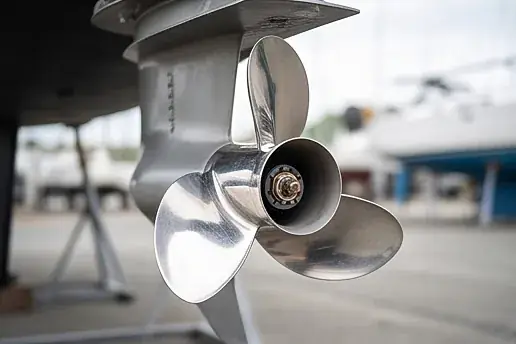 Boat propeller guide: materials, diameter, pitch and maintenanceThe propeller's role in boat performance The propeller is the only component that converts engine power…
 Marine terminology glossary: essential terms every boat owner should knowParts of the boat The bow is the forward end of the boat; it parts the…
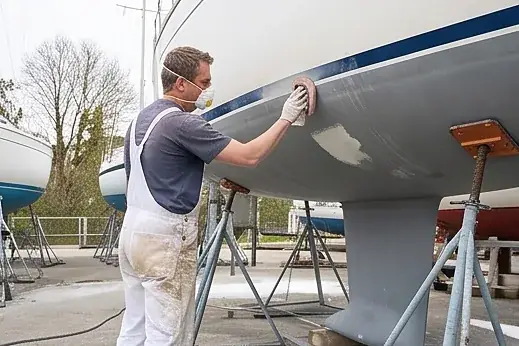 Annual boat maintenance calendar: pre-season, in-season and haul-outConsistent, well-timed maintenance keeps a boat safe, reduces breakdowns at sea, protects its resale value and…
Reader ratings
No ratings yet. Was this useful? Rate it and add what you know: corrections and first-hand tips help the next reader.
★ Rate this guide
Suggest a correction
Cite this page
Boat anode (zinc) guide: galvanic corrosion, anode types and when to replace. Boat Almanac, updated 31 October 2026. https://boatalmanac.com/articles/boat-anode-zinc-guide-galvanic-corrosion-anode-types-and-when-to-replace/ (accessed 21 November 2026).