Published By Tuna Karslı, editorHow guides are checked
What covers and awnings do
Boat covers and awnings serve two functions: protecting crew from sun, wind and spray while the boat is in use; and protecting the boat from weather, UV, dirt and birds when it is laid up. The right cover, correctly fitted, improves both comfort and the boat’s longevity.
Bimini top
A bimini top is a foldable shade canopy over the , providing sun and light-rain protection. It consists of a stainless steel or aluminium frame covered in waterproof fabric. When not needed, the frame folds down and stows on deck.
The bimini should be wide enough to fully cover the cockpit. Its height must allow the crew to stand comfortably; a bimini that is too low obstructs visibility and places more load on the frame in a breeze. One that is too high presents more windage and stresses the structure.
Sunbrella or equivalent acrylic fabric is standard. UV-resistant, water-repellent and breathable, it does not cause condensation underneath, unlike vinyl-coated fabrics.
Dodger (sprayhood)
A dodger is a semi-rigid spray and wind shield fitted forward of the cockpit over the companionway. It keeps waves and spray out of the cockpit in bad weather. Common on sailing yachts; on motorboats a flybridge or hardtop serves the same purpose.
A dodger typically consists of a stainless steel frame, an acrylic cloth body and PVC clear windows. PVC windows yellow and cloud over time; UV protector and appropriate cleaning products extend their life. Badly yellowed windows can be partially restored by polishing but severe discolouration requires replacement.
A dodger carries a significant load from the wind. Frame-to-deck fastenings must be strong; a loose fitting damages both the dodger and the deck. Stitching and cloth join points should be inspected regularly.
Winter cover
A winter cover protects the entire external surface of a laid-up boat from rain, snow, UV, bird droppings and leaf litter during extended periods out of use.
Ventilation under the cover is critical. A completely sealed cover traps condensation and creates conditions for mould and rot. Ventilation points must be positioned to allow air circulation while preventing water ingress.
The cover must be supported over a frame (a shrink-wrap frame or a purpose-built structure) rather than laid directly on the boat. An unsupported cover sags under water and snow; the accumulated weight damages both the cover and the boat. Ensure the frame creates a slope to shed water.
Shrink-wrap, heat-applied plastic film, has become a popular professional winter storage method. It forms a tight, custom-fit shell over the boat that provides excellent wind and water protection. Its disadvantage is that it is single-use; some yards offer recycling programmes.
Boat covers
A full boat cover is used for small and medium open boats. It covers the entire boat and provides protection during road transport on a trailer as well as at storage. The cover must fit the boat; a loose cover chafes the in the wind, while a tight cover tears at points of high stress.
A T-top cover is shaped to fit over the T-top structure of a boat. A console cover protects the station and electronics.
Fabric quality is the key variable. Solution-dyed acrylic is the most durable and UV-resistant material. Polyester covers are less expensive but have limited UV resistance and fade within a few seasons.
Maintenance
Brush and rinse fabrics regularly with cold water. For stubborn stains, use the fabric manufacturer’s recommended cleaner; bleach and harsh chemicals destroy the fabric’s water repellency and UV protection.
Keep zips clean of salt residue and apply a silicone-based zip lubricant. Zips in salt environments seize; if forced, the teeth break.
Check metal frame components for corrosion. Even stainless steel can develop pitting corrosion in salt water. Clean and apply protective spray.
Read next
 The 5 Stages of Winter Lay-Up Denial: Why We All Pretend We’re Going to “Work on the Boat Every Weekend”Let’s talk about the biggest, most widely accepted collective delusion in the entire maritime world: The…
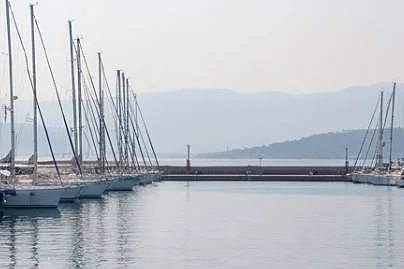 Wintering a yacht in Turkey: marinas, haul-out, costs, paperworkTurkey has become one of the most popular places in the Mediterranean to lay up a…
 How to Winterize a Sailboat in the MediterraneanWinterizing in the Mediterranean is different from winterizing in northern Europe or North America. Frost is…
Reader ratings
No ratings yet. Was this useful? Rate it and add what you know: corrections and first-hand tips help the next reader.
★ Rate this guide
Suggest a correction
Cite this page
Boat cover and awning guide: bimini, dodger, winter cover and boat covers. Boat Almanac, updated 22 October 2026. https://boatalmanac.com/articles/boat-cover-and-awning-guide-bimini-dodger-winter-cover-and-boat-covers/ (accessed 21 November 2026).