Published · Updated By Tuna Karslı, editorHow guides are checked
A marina berth is usually the largest recurring cost of owning a boat after depreciation, and the berth contract is the document that decides what you actually get for that money. This guide covers what a marina should provide, what a sound berth contract contains, how to compare true annual costs, the legal points that matter when something goes wrong, and the mistakes owners most often make when signing up.
What services does a marina provide?
A marina is a facility where a boat can be moored securely, maintenance and repairs can be carried out, shore power and water connections are available, and the crew’s day-to-day needs are met. Services fall into three tiers.
Core services
- A safe berth: a pontoon or quay berth with cleats or rings, or finger pontoons, and protection from swell behind a breakwater.
- Shore power and fresh water at the berth, usually metered.
- Haul-out: a or crane, plus a wash-down area for pressure washing the hull.
- Security: controlled access to the pontoons, CCTV and night patrols.
- Waste reception: bins for general waste, separated containers for used oil, filters, batteries and paint, and a pump-out station for holding tanks.
- Sanitary facilities: toilets and showers, and car parking.
Common extras
Better-equipped marinas add a fuel dock, chandlery, restaurant, laundry, Wi-Fi, a swimming pool, a boatyard with hard standing, on-site technical firms (engine, , electrics, upholstery) and a concierge or customs clearance desk for visiting foreign yachts.
Afloat or ashore
Boats are kept at a marina in two ways: afloat (floating pontoon or fixed quay) or ashore (hard standing, covered storage or a dry stack for smaller motorboats). Keeping a boat afloat means it is ready to use at any time, but fouling builds up and, on older GRP hulls, prolonged immersion is one of the factors behind osmotic blistering. Ashore storage removes those risks and is generally cheaper per month; the drawback is the cost and scheduling of a lift every time the boat is launched or recovered.
Quality marks and standards worth knowing
Marketing brochures all promise much the same, so it helps to know which independent schemes and technical standards actually mean something.
- Blue Flag: run by the Foundation for Environmental Education (FEE), the scheme began in France in 1985 and went Europe-wide in 1987. A Blue Flag marina must meet a set of at least 38 criteria covering environmental education, water quality, environmental management, and safety and services. Türkiye alone had 30 Blue Flag marinas in 2026. The flag is awarded annually, so check the current list rather than a plaque on the wall.
- Shore power connectors: marinas in Europe and the Mediterranean normally fit blue single-phase IEC 60309 sockets in 16 A and 32 A sizes. In the UK, marina electrical installations fall under BS 7671 (the IET Wiring Regulations). Each socket should be protected by an RCD.
- Waste reception: in EU ports and marinas, waste reception from ships, including recreational craft, is governed by Directive (EU) 2019/883 on port reception facilities. In Türkiye, holding-tank discharges are recorded through the national Maritime Waste Application (DAU), which replaced the Blue Card system in 2020.
What should a berth contract contain?
The relationship between the marina and the boat owner is governed by a berth contract (sometimes called a berthing agreement, mooring licence or terms and conditions). It defines the rights and obligations of both parties. A well-drafted contract should cover the following.
The berth itself
The pontoon and berth number, and the maximum length overall, and it accepts. Check whether the contract gives you a specific berth or only “a berth of suitable size”. If the marina may move you, the conditions for reallocation should be explicit: for example only for works, safety or a boat larger than declared, with notice.
Fees and payment terms
Annual, seasonal or monthly berth fees; how length is measured (length overall including bowsprit, davits and bathing platform is common, and can add a metre or more to the billed length); electricity and water charges; lift-out, launch and hard-standing fees; and charges for extra services (wash-down, storage, guardiennage). Each should be listed separately. The price escalation mechanism (fixed, index-linked or at the marina’s discretion) should be stated, together with the currency of the contract.
Term, renewal and termination
Contract duration, renewal conditions and the notice period for termination should all be clear. If there is an automatic renewal clause, note exactly how many days before the renewal date you must give written notice to cancel. Look for what happens if you sell the boat mid-term: some contracts allow transfer or a pro-rata refund, many do not.
Liability and insurance
The contract should state the marina’s liability for damage to the boat, the owner’s liability for damage to marina property and other boats, and insurance obligations. Most marinas require the owner to hold a valid marine insurance policy with third-party liability cover of a stated minimum amount, and to provide a copy each year. Many contracts also exclude the marina’s liability for weather damage; read these clauses carefully.
Use and work rules
Marina rules on noise, speed, waste disposal, fuelling, guests, liveaboards, pets and subletting are usually attached as a schedule. Pay special attention to rules on outside contractors: some marinas allow only approved firms to work on boats, or charge a daily fee for outside contractors and for owners doing their own work .
Lien and unpaid fees
Almost every contract gives the marina a right to retain the boat until outstanding fees are paid, and often the right to sell it after a stated period of non-payment. Check the notice the marina must give before exercising that right.
Berth contract checklist
- Berth number, maximum , beam and draught written in
- Method of measuring length stated
- All fees itemised, with the escalation method and currency
- Electricity and water: metered or flat rate, and the unit price
- Number of free lift-outs (if any) and the price of extra ones
- Start date, end date and notice period for renewal or cancellation
- Rules on selling the boat or transferring the berth
- Insurance minimums, and whether the marina must be named on the policy
- Rules for outside contractors and DIY work
- , guest and subletting rules
- Lien and sale clauses for unpaid fees
- Dispute resolution clause and governing law
How to compare prices
Marina charges are generally based on the boat’s length, sometimes also on beam (catamarans are often charged a multiplier of the monohull rate). Price differences between marinas in the same area can easily be fifty percent or more. When comparing, look at total annual cost, not just the berth fee.
| Cost item | How it is usually charged | What to ask |
|---|---|---|
| Berth fee | Per metre of LOA, per year, season or month | Is VAT included? How is LOA measured? |
| Electricity | Metered per kWh, or flat daily rate | Unit price; is there a minimum charge? |
| Water | Metered or included | Is it potable? Is there a seasonal limit? |
| Lift-out and launch | Per lift, by length or weight | Is a pressure wash included? Is blocking extra? |
| Hard standing | Per metre per day or month | Do cradles or stands cost extra? |
| Contractor or DIY fee | Daily charge, or banned | Can I use my own engineer? |
| Car parking and access cards | Per card or per car | How many are included? |
| Waste and pump-out | Included, or per use | Is a discharge record issued? |
An annual contract is generally cheaper per day than monthly or seasonal payments, and some marinas offer an early payment discount. Multi-year contracts can fix the price, but check the exit terms before committing. Location directly affects price: marinas close to large cities, airports or popular holiday areas cost more, and a marina slightly further away but well connected by road can offer real savings.
Marina selection checklist
- Shelter: which wind directions send swell into the basin? Ask berth holders, not the sales office.
- Depth and size: enough depth at the berth and in the entrance at low water, with a margin for your draught.
- Lifting capacity: the travel lift’s rated tonnage and maximum beam must suit your boat’s real (loaded) weight.
- Fuel and water on site, and the fuel dock’s opening hours.
- Technical services on site or nearby, and whether you are free to choose who works on your boat.
- Security: access control on the pontoons, CCTV coverage and night patrols.
- Electricity: socket type and amperage at your berth, and whether supply is reliable in peak season.
- Facilities: clean, maintained showers, toilets and laundry.
- Access: road, public transport, airport distance and car parking.
- Environmental performance: Blue Flag status, pump-out station and segregated waste.
The best way to answer these questions is a visit before signing, ideally on a windy day. Talking to other boat owners on the pontoon gives insight into the marina’s day-to-day operation that no website or brochure can provide.
Rights and responsibilities
The boat owner
- Pay fees on time.
- Keep valid insurance and provide proof when asked.
- Keep mooring lines, chafe protection and fenders in good order, and double up before forecast gales.
- Keep the shore power lead in good condition and of the correct rating.
- Comply with marina rules, including fuelling and hot-work procedures.
- Prevent pollution: no fuel or oil spills, no discharge of sewage or grey water where it is banned, no antifouling dust or paint waste on the hard without containment.
The marina
- Keep the berth, pontoon, cleats and lazy lines safe and usable.
- Maintain the shore power and water infrastructure.
- Keep common areas clean and maintained.
- Take reasonable security measures.
- Deliver the services specified in the contract with reasonable care.
Unfair terms and consumer protection
Where the owner is a private individual, consumer law may limit what the marina can exclude. In the UK, for example, the Consumer Rights Act 2015 implies a term that a trader will perform a service with reasonable care and skill (section 49), and makes unfair terms not binding on the consumer (section 62). Under the Unfair Contract Terms Act 1977, liability for death or personal injury caused by negligence cannot be excluded. Similar rules exist across the EU. A clause that excludes all liability in every circumstance may therefore not be enforceable, but this depends on the jurisdiction and the facts; take local legal advice in a real dispute.
When something goes wrong
If a dispute arises, put the complaint in writing to marina management first, with photographs and dates. If that fails, the dispute resolution clause in the contract (mediation, arbitration or the courts of a named place) comes into play. If the boat is damaged, notify your insurer promptly; your policy may require it within a fixed number of days, and the insurer may pursue the marina directly.
Common mistakes
- Comparing berth fees only: electricity, lifts, hard standing and contractor fees can change the ranking completely.
- Declaring the hull length rather than LOA: marinas measure on arrival, and the difference is billed.
- Missing the cancellation deadline: an automatic renewal can commit you to another full year.
- Assuming you can use your own contractor: check before you sign, not when the engine needs work.
- Using an undersized or damaged shore power lead: a 16 A lead should have 2.5 mm² cores; never plug a 16 A lead straight into a 32 A socket.
- Leaving the boat unchecked for months: most contracts make chafed lines and flat batteries the owner’s problem. Arrange regular checks.
- Not reading the insurance clause: some marinas require a specific minimum third-party limit that a basic policy does not meet.
Sources
Read next
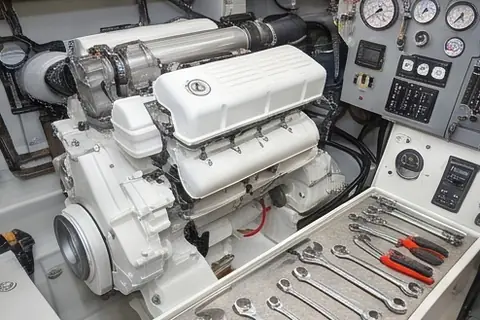 Marine Diesel Engine Failure at Sea: Advanced Troubleshooting, Emergency Repairs and Getting Home Under PowerAn offshore skipper's technical guide to diagnosing marine diesel failures, understanding engine systems, managing overheating, fuel…
 Marina Berth Prices Compared: Turkey vs Greece vs Croatia vs SpainUpdated October 2026. Figures are drawn from published marina tariffs, owner-reported contracts and recent surveys. Always…
 Wintering a yacht in Turkey: marinas, haul-out, costs, paperworkTurkey has become one of the most popular places in the Mediterranean to lay up a…
Reader ratings
No ratings yet. Was this useful? Rate it and add what you know: corrections and first-hand tips help the next reader.
★ Rate this guide
Suggest a correction
Cite this page
Marina services guide: berth contracts, facilities, rights and what to look out for. Boat Almanac, updated 24 October 2026. https://boatalmanac.com/articles/marina-services-guide-berth-contracts-facilities-rights-and-what-to-look-out-for/ (accessed 21 November 2026).