Published By Tuna Karslı, editorHow guides are checked
Buying a used boat without an independent survey is one of the most common and most expensive mistakes in the used boat market. Boats are not standardised products like cars: every hull has its own build quality, maintenance record and history of repairs. A glossy listing, a fresh polish and a seller’s assurances tell you very little about what is happening inside the laminate, the engine or the wiring. That is why an independent marine survey, a systematic professional inspection carried out on your behalf, is so valuable.
What is a boat survey?
A boat survey is a detailed inspection of a vessel by a marine surveyor, followed by a written report. Its purpose is to establish the boat’s true condition, identify defects and safety issues, and, where requested, give an opinion of market value. For a buyer, the report acts as an expert pair of eyes and gives the purchase decision, and any price negotiation, a documented technical basis.
Surveyors assess boats against recognised technical standards. In North America the reference point is usually the standards published by the American Boat and Yacht Council (ABYC), while in Europe and the UK the ISO standards used under the Recreational Craft Directive and its UK equivalent are widely applied. Many surveyors draw on both, along with the builder’s specifications and the requirements of insurers.
Types of boat survey
Pre-purchase survey
The most common type, commissioned by a buyer before completing a purchase. It covers the hull and structure, deck and fittings, engine and mechanical systems, electrical systems, plumbing, gas and fuel systems, on sailing yachts, and safety equipment. Findings are typically graded by urgency, for example:
- Category A, immediate attention: safety-critical issues that should be resolved before the boat is used, such as water ingress, fire-risk electrical faults, fuel or gas leaks and structural cracking.
- Category B, short-term attention: issues to address in the coming months, such as engine oil leaks, worn steering components or inoperative safety equipment.
- Category C, maintenance advice: recommendations for upkeep and improvement, such as cosmetic wear, paintwork renewal or suggested equipment upgrades.
A thorough report is extensive, often running to dozens of pages with photographs, and is usually delivered within two to three working days of the inspection. It often includes an estimated market value, which lenders and insurers may use as a reference.
Insurance survey
Insurers often ask for a recent survey before covering a boat for the first time, at renewal for older boats, or when a boat changes hands. The is similar to a condition survey, with particular attention to the items the insurer lists. Many insurers set an age above which a survey is mandatory.
Damage survey
Carried out after a collision, grounding, fire, sinking or storm damage, a damage survey documents the cause and extent of the damage and the work needed to repair it, and supports the insurance claim. Call the surveyor as soon as possible after the incident, and before repairs begin, so that the evidence is recorded.
Condition survey
A periodic inspection for an existing owner, used to document the boat’s current state and plan maintenance priorities. It is also useful before putting a boat up for sale, before a refit, for valuation purposes, or before a long passage.
Hull inspection and moisture readings
The surveyor inspects the hull inside and out for cracks, impact damage, previous repairs, and signs of stress around fittings, bulkheads, the and engine mounts. On fibreglass hulls, the laminate is sounded with a phenolic hammer to detect voids and delamination, and moisture readings are taken with an electronic moisture meter at reference points across the bottom, the keel area and the topsides.
Elevated readings can point to water uptake, or a wet core. For meaningful results, the boat should have been ashore and drying for at least a week. A freshly hauled hull still carries surface moisture from the sea and gives artificially high readings, so a survey carried out straight after the lift can only give a provisional picture. No single reading is a diagnosis: readings are interpreted together with the boat’s age, construction and the other survey findings.
Hull thickness measurement
On steel and aluminium hulls, ultrasonic thickness gauging shows where corrosion has reduced plate thickness and whether any areas are approaching the point where replacement is needed. This is one of the most technically important parts of a metal-hull survey.
Electrical systems
Salt air and moisture are hard on electrical connections, and poor wiring is one of the leading causes of fires on boats. The surveyor typically checks:
- DC and AC distribution panels, circuit protection and fuse or breaker ratings.
- Cable condition, sizing, routing and terminations.
- Bonding, anodes and protection against galvanic corrosion, often with a reference electrode reading.
- Shore power polarity and the AC safety installation; reversed polarity can be lethal.
- Battery condition, charging and isolation.
- Operation of the pumps, navigation lights and other critical circuits.
Engine and mechanical systems
During a general survey, the engine is assessed visually and in operation: oil condition, coolant and raw-water flow, exhaust smoke, leaks, belts and hoses, engine mounts, shaft alignment and seals, and the condition of the propeller and steering gear. Where the engine is a large part of the boat’s value, ask for a dedicated engine survey, often arranged with an independent marine engineer or manufacturer-approved technician. This can include compression and blow-by testing and oil analysis, which give a much clearer picture of the engine’s internal condition and remaining life.
Sea trial
A thorough pre-purchase survey usually includes a after the inspection ashore. The engine is run across its rev range and at full load, steering and handling are tested, and noise and vibration are assessed. Engine temperatures, oil pressure and charging voltage are monitored under way. Some problems only show up under load: shaft misalignment, for example, may only appear as vibration when the shaft is turning under power. The buyer usually pays for haul-out, fuel and any berthing charges associated with the survey and sea trial.
How to choose a boat surveyor
A good surveyor works for you, the client, and for nobody else in the transaction. That independence is what gives the report its credibility. When choosing a surveyor, look for:
- Independence: a surveyor whose only interest is giving you an accurate picture of the boat.
- Technical knowledge: a solid understanding of hull construction, engines, electrical and electronic systems, rigging and safety equipment, and of the relevant standards. ABYC Professional Membership, for example, indicates engagement with ABYC technical standards.
- Relevant experience: verifiable experience with the type, size and construction of boat you are buying.
- Proper equipment: moisture meter, sounding hammer, thermal camera and, for metal hulls, an ultrasonic thickness gauge.
- Report quality: ask for a sample report. It should be detailed, photographically documented and clearly graded. A short, generic report does not do the job.
- Acceptance by your insurer and lender: check that they will accept the surveyor’s report.
When to commission a survey
- Before purchase: once you have agreed a price subject to survey, and before the balance is paid. Most standard sale agreements include a survey clause for this purpose.
- For insurance: when taking out a first policy or when the insurer asks.
- After damage: before repairs begin, to document the claim.
- Periodically: every few years as a general health check, particularly on older boats.
- Before a long passage: a condition check reduces the risk of failures far from help.
How much does a boat survey cost?
Survey fees depend on the boat’s size, type, construction and the scope of inspection, and are commonly quoted per foot or metre of length, with minimum charges for small boats. Separate engine or rigging surveys, travel, haul-out, crane and sea trial costs are usually additional. Even so, a survey usually pays for itself, whether through a renegotiated price or through the defects it allows you to avoid.
Why skipping the survey is risky
Buyers sometimes skip the survey to save the fee, but the risks are considerable. Osmosis or a wet core, undetected before purchase, can lead to repair bills that represent a significant share of the value of an older boat. Hidden electrical faults create a fire risk at sea. Engine hour meters can be replaced or reset, and a full picture of an engine’s condition comes from inspection and testing, not from the hour reading alone. On boats with an unknown history, cosmetic repairs can conceal structural damage that only shows up in a methodical survey. Category A findings give you solid grounds to withdraw from the purchase or to negotiate a substantial reduction.
How to read the survey report
A professional report typically covers vessel identification, hull and structure, deck and fittings, propulsion and mechanical systems, electrical and electronic systems, plumbing and fuel systems, rigging where applicable, safety equipment, a general assessment and the graded list of findings. Start with the graded findings. Category A items are safety-critical and directly affect whether, and at what price, to proceed. Category B items are useful in price negotiation. Category C items are maintenance recommendations that help protect the boat’s value over time. If anything in the report is unclear, ask the surveyor to talk you through it.
For independent survey support, visit our survey services page.
Read next
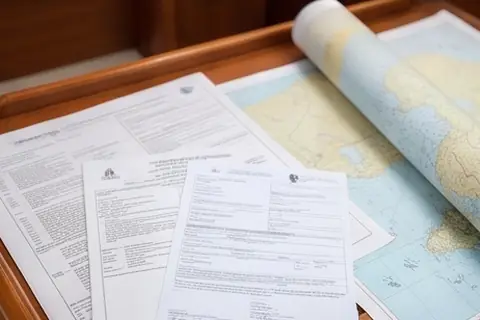 Moisture Readings in a Survey: What the Numbers MeanMost survey reports for fibreglass boats include moisture readings, often presented as a table or a…
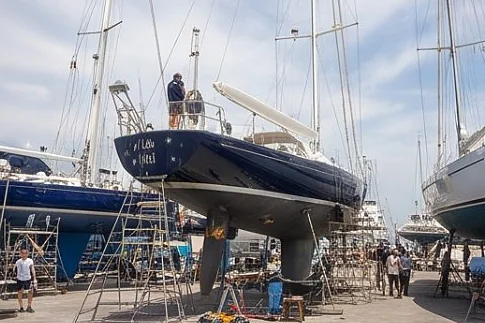 What Does a Marine Survey Cover? A Buyer’s ChecklistBuying a boat without a survey is like buying a house without looking in the loft.…
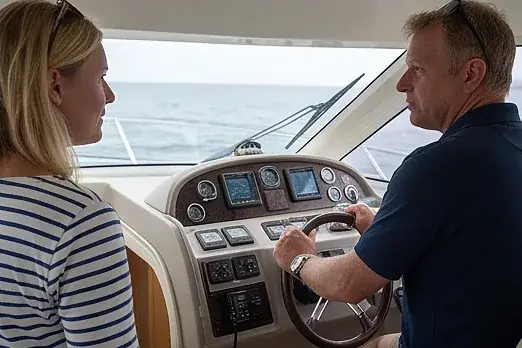 Sea trial guide: what to check, inspection checklistWhat is a sea trial? A sea trial is a test passage that shows how a…
Reader ratings
No ratings yet. Was this useful? Rate it and add what you know: corrections and first-hand tips help the next reader.
★ Rate this guide
Suggest a correction
Cite this page
Boat Survey Guide: When You Need One and What to Expect. Boat Almanac, updated 22 October 2026. https://boatalmanac.com/articles/boat-survey-guide/ (accessed 21 November 2026).