Arriving by boat in Saint Martin (French side) / Sint Maarten (Dutch side)
Last checked against 7 official sources
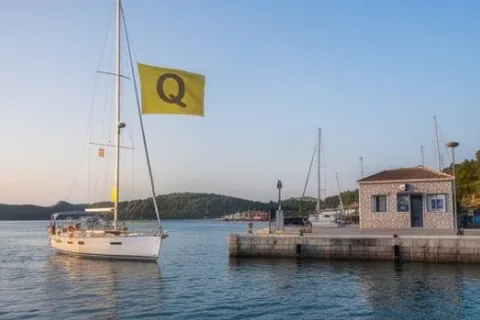
The island has two separate countries with separate clearance. French side (Saint-Martin): submit the online clearance form, then the skipper visits the Port Office in Marigot (Galisbay) on arrival and departure. Dutch side (Sint Maarten): clear in person with Customs and Immigration at Simpson Bay or Philipsburg (Great Bay) and pay weekly harbour, anchoring and bridge fees to the Simpson Bay Lagoon Authority (SLAC).
Arrival step by step
Yes on both sides. French side: clearance is done online (clairance.portdemarigot.com) and completed at the commercial port reception at Galisbay, Marigot; Marina Fort Louis offers the in-person step for its own guests. Customs-only computers are at Island Water World and Ile Marine (Marigot) and Anse Marcel Marina, but you still need the Port Office visit. Port jurisdiction covers Marigot Bay, Potence Bay, the French side of Simpson Bay Lagoon, part of Grand Case Bay and Cul de Sac Bay. Dutch side: the ports of entry are Simpson Bay (Customs and Immigration at the police station by the Simpson Bay bridge) and Philipsburg in Great Bay. Moving from one side to the other means clearing out and clearing in again.
- Decide which side you will clear into first; each side is a separate clearance.
- French side: register the boat and file the arrival form at clairance.portdemarigot.com up to 24 hours before arrival, and write down the clearance number.
- French side: go to the Port Office at Galisbay (Mon-Fri 08:00-17:00, Sat 08:00-12:00) with documents to have the form stamped and identity checked.
- Dutch side: anchor at Simpson Bay or Great Bay and go ashore with the skipper's papers to Customs and Immigration.
- Dutch side: if entering Simpson Bay Lagoon, call the bridge on VHF 12 and use the scheduled openings.
- Dutch side: pay the SLAC harbour, anchoring and bridge fees at the SLAC office and keep the receipts.
- Declare all crew and passengers before anyone goes ashore.
- Before moving to the other side or to St Barths, clear out properly.
Ports of entry boaters use
- Simpson Bay · Dutch side, south coast
Customs, Immigration and SLAC in one building by the bridge, open daily; cheaper than Philipsburg; gateway to the lagoon marinas. - Philipsburg (Great Bay) · Dutch side, south coast
Main commercial and cruise port with Immigration and Customs; clearing out here costs much more. - Marigot (Galisbay Port Office) · French side, west coast
Official French side Port Office; required in-person step for clearance. - Marina Fort Louis · French side, Marigot
Only marina offering the in-person Port clearance step for its guests; Sunday clearance 08:00-12:00 reported. - Anse Marcel Marina · French side, north coast
Has a Customs computer; you still need the Port Office visit.
Papers to have on board
- Clearance (zarpe) from your last port of call; the Dutch side denies entry without it
- Boat registration certificate
- Boat insurance certificate
- Crew and passenger list
- Passports for everyone on board, with visas where needed
- French side clearance number from the online system
- Receipts for SLAC, bridge and clearance fees (needed to clear out on the Dutch side)
- Pet health certificate, microchip and rabies records if a pet is aboard
Crew, passports and visas
French side: French entry rules apply from 12 miles off the coast and immigration control is systematic (Border Police, PAF). UK citizens can stay up to 3 months without a visa and need a passport valid for 3 months after departure (GOV.UK, Dec 2025). The GOV.UK page sends readers to the French consulate on how other rules apply, and none of the sources says whether the Schengen 90/180 rule or EES applies on Saint-Martin. If you need a visa, have it stamped at Immigration. Dutch side: many nationalities need no visa; check your nationality. Clear in and out with Immigration. Every captain must declare crew and passengers on the French side before anyone lands.
🇪🇺 Part of France and of the EU, but outside the Schengen area and outside the EU VAT area. Days spent here do not count towards Schengen's 90 days in any 180, and a Schengen visa is not on its own enough for every nationality: check the French rules for this territory before you sail. The euro is the money. Customs rules for the boat are those of this territory: ask the port of entry how long a non-EU boat may stay. Read the Schengen and EU rules for boats for mainland Europe.
How long the boat may stay
No source gives a temporary admission limit for foreign yachts on either side. Dutch side: harbour (SLAC) and anchoring fees are charged per week for as long as you stay in Sint Maarten waters. French side: mooring/port fees are paid on departure at the commercial port reception.
Fees, taxes and permits
- French side: combined Customs and Port clearance 10.50 EUR for visiting yachts, paid by the skipper.
- French side: mooring fee at Marigot payable at the port reception on departure; the port site publishes the rate only as an image (amount not confirmed).
- Dutch side Customs clearance: 2 USD for 1-99 GT, 5 USD for 100-499 GT, 9 USD for 500+ GT.
- Dutch side SLAC harbour fee, weekly, anywhere in Sint Maarten waters (Apr 2025): 5 USD 1-99 GT, 10 USD 100-499 GT, 20 USD 500+ GT.
- Dutch side anchoring fee, weekly (Apr 2025): 20 USD 8-13 m, 40 USD 13-18 m, 60 USD 18-23 m, 90 USD 23-28 m.
- Dutch side Simpson Bay bridge fee, in and out (Apr 2025): 7 USD 9-12 m, 21 USD 12-15 m, 42 USD 15-18 m, 120 USD 18-22 m, paid at the SLAC office.
- Dutch side clearing out at Philipsburg (Great Bay): based on length and tonnage, about 400 USD for a 16.6 m / 56 GT boat. Simpson Bay is much cheaper.
Buoyage and navigation marks
Check the chart legend: we are not sure which buoyage region applies in Saint Martin (French side) / Sint Maarten (Dutch side). Both are shown below.
Region A
Red to port when coming in from sea (the opposite of the Americas, Japan, Korea and the Philippines). Preferred channel marks (a lateral mark with a band of the other colour) follow the same colours: the main colour tells you which side to leave the mark on when following the preferred channel.
Region B
Red right returning: red to starboard when coming in from sea. Preferred channel marks (a lateral mark with a band of the other colour) follow the same colours: the main colour tells you which side to leave the mark on when following the preferred channel.
The same everywhere: yellow and black cardinal marks (pass on the named side: north, east, south or west of the danger), black and red isolated danger marks, red and white safe water marks, yellow special marks, and the blue and yellow emergency wreck mark. Where a channel has no obvious direction, the chart shows the direction of buoyage with a small arrow. All marks explained. Always follow the chart and local notices: these are summaries, not a navigation source.
Anchoring, marine parks and protected areas
French side: the Réserve Naturelle Nationale de Saint-Martin (about 30 km2, north-east coast, including Pinel, Tintamarre, Rocher Créole and Cul de Sac outside port limits) has ecological mooring buoys. Overnight stays there need an online reservation and anchoring at the popular sites is being phased out (Reserve newsletter, 2021). A 20 m strip along the coast is closed to anchoring by prefectural decree. Overnight mooring is not allowed at Ilet Pinel (Reserve form, 2025). Inside the reserve: no fishing, no collecting, no feeding animals, no discharging toilet, shower or dish water, no hull scraping. Dutch side: in Simpson Bay Lagoon do not anchor in fairways, entrance channels or near the Causeway bridge and runway extension; speed limit 5 mph. Man of War Shoal Marine Park: only vessels registered with the Nature Foundation and carrying user tags may enter (2016 report). No fine amounts were found.
Fishing
French side: fishing and collecting of any animals, plants, shells or coral are forbidden inside the Nature Reserve. No source states a recreational fishing licence rule for the rest of the island.
Pets on board
French side: same rules as France. Microchip, rabies vaccination at least 30 days before arrival, health certificate from an official vet in the country of origin, and a rabies titre test at least 3 months before travel if coming from a high-rabies country. Pets from non-EU countries should be declared. Dogs and cats under 16 weeks are not allowed. A cruiser report warns of distemper among local dogs. Dutch side: no source found; contact the authorities before arrival.
Flares, firearms and drones
No source consulted states rules for flares, firearms or drones on either side. Declare any firearms on arrival and ask Customs.
Fuel and duty
Port St Maarten lists bunkers and a megayacht fuel station at the Windjammer berths. No source states duty-free or tax-free fuel rules for small private yachts.
Waste and holding tanks
French side Nature Reserve: no discharge of toilet, shower or dish water. Dutch side: Port St Maarten offers waste oil and black water removal. No general holding tank rule was found for either side.
Seasons and office hours
French side Port Office hours: Mon-Fri 08:00-17:00, Sat 08:00-12:00. Dutch side Simpson Bay: Customs and Immigration 07:00-20:00 daily, SLAC fee office 08:30-12:00 and 13:30-16:30 daily (2024 reports). Philipsburg Customs closes on public holidays. The Simpson Bay bridge opens only at scheduled times. Extra bridge openings are added around the Heineken Regatta.
Coming from or going to Turkey
No rules specific to boats from Turkey were found. What matters is the clearance from your last port of call, which will normally be an Atlantic or Caribbean port. Pet owners should note the French side rule that a rabies titre test is needed if coming from a high-rabies country.
Leaving the country
French side: file the departure form online up to 24 hours before leaving, pay mooring fees and visit the Port Office for the stamp, with proof of payment, crew list, passports and registration. You must clear out even for a short trip to St Barths. Dutch side: clear out with Immigration, Customs and SLAC at the same port where you cleared in, showing receipts for bridge, clearance and mooring fees.
Common mistakes and fines
- Arriving on the Dutch side without a clearance (zarpe) from your last port: entry will be denied.
- Clearing out at Philipsburg instead of Simpson Bay: Fees are much higher there.
- Skipping Port clearance on the French side: the Port Authority now enforces it with a patrol vessel (since Jan 2024).
- Leaving for St Barths or the other side without clearing out, which can stop you clearing in again.
- Dinghy theft in Marigot Bay and Simpson Bay: lock the dinghy and outboard with heavy chain.
Where the sources disagree
These points were unclear or have changed recently. Ask the port authority or customs on arrival.
- Sint Maarten online ED card: It became mandatory for air travellers on 15 Oct 2024 and may be extended to yachts; an April 2025 report says officers did not accept online ED forms from a yacht and used paper forms.
- The new French side Port Office at the Marigot ferry terminal was expected to open in March 2024; the official port page still names the Galisbay commercial port reception.
- Confirm on VHF 12.
- The SLAC office was temporarily relocating to the ferry dock across from the airport parking lot (Port St Maarten news, 21 Oct 2026).
- Sint Maarten fees are dated April 2025 and are not confirmed on an official tariff page that could be read.
- SailClear and eSeaClear are not used on either side according to the sources; the French side has its own online system.
Questions boaters ask
Do I need to clear out to move between the French and Dutch sides?
Yes, if you move the boat by sea. Dinghying across the lagoon or taking the bus between sides has no border control.
Can I clear in on the French side only online?
No. You file online first, then the skipper must visit the Port Office (or Marina Fort Louis for its guests) on arrival and departure.
How much does French side clearance cost?
The combined Customs and Port clearance was 10.50 EUR for visiting yachts (Jan 2024). Mooring fees at Marigot are extra.
Which Dutch side port is cheaper?
Simpson Bay. Clearing out at Philipsburg is based on length and tonnage and can reach about 400 USD for a 56 GT boat.
Do I pay weekly fees on the Dutch side even outside the lagoon?
Yes. The SLAC harbour fee applies anywhere in Sint Maarten waters, in the bay or the lagoon.
Can I anchor at Pinel or Tintamarre?
Use the reserve mooring buoys. Overnight stays need an online booking and overnight mooring is not allowed at Pinel.
Is SailClear used here?
Not according to the sources. SailClear covers 15 other Caribbean countries; the French side uses its own online clearance system.
Official sources
The authority pages this guide rests on, with the date each was last opened and read.
- Port de Marigot: Clearances
portdemarigot.com · checked 25 Oct 2026 - Port St. Maarten: Simpson Bay Lagoon Authority (SLAC)
Port St. Maarten · checked 25 Oct 2026 - Port St. Maarten: Yachting
Port St. Maarten · checked 25 Oct 2026 - Port St. Maarten home and news
Port St. Maarten · checked 25 Oct 2026 - Réserve Naturelle de Saint-Martin: overnight mooring declaration 2025
Saint-Martin Nature Reserve · checked 25 Oct 2026 - Réserve Naturelle de Saint-Martin: newsletter on moorings and anchoring
Saint-Martin Nature Reserve · checked 25 Oct 2026 - GOV.UK: St Martin and St Barthélemy entry requirements
GOV.UK · checked 25 Oct 2026
Cruising guides and sailor reports
Used for practical detail and recent experience; where they disagree with an official page, the official page wins and the point is listed under "Where the sources disagree".
This guide is general information for private, non-commercial yachts and is not legal advice. Rules and fees change; confirm with the port authority, customs or your agent before arrival. Seen something out of date? Tell us.
Other countries
Albania · Antigua and Barbuda · Australia · Bahamas · Barbados · Belgium · Belize · Bermuda · Brazil · British Virgin Islands · Bulgaria · Canada · Cape Verde (Cabo Verde) · Colombia · Cook Islands · Costa Rica · Croatia · Denmark · Dominica · Dominican Republic · Ecuador · Egypt · Estonia · Fiji · Finland · France · French Polynesia · Georgia · Germany · Gibraltar · Greece · Grenada · Guadeloupe · India · Indonesia · Ireland · Israel · Italy · Japan · Madagascar · Malaysia · Maldives · Malta · Martinique · Mauritius · Mexico · Montenegro · Morocco · Netherlands · New Caledonia · New Zealand · Norway · Oman · Panama · Papua New Guinea · Philippines · Poland · Portugal · Réunion · Saint Helena