Arriving by boat in British Virgin Islands
 Arriving by boat in British Virgin Islands
Last checked against 6 official sources
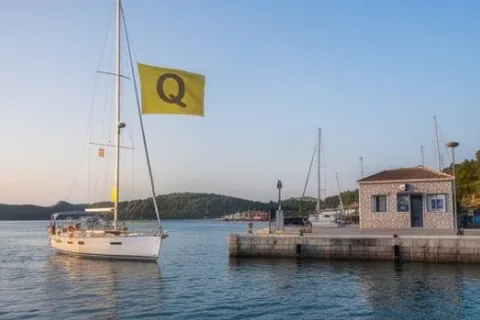
A visiting yacht must clear in with BVI Customs and Immigration immediately on arrival at a port of entry, with passports and boat papers. Pre-arrival notice through SailClear is recommended. Using the National Parks Trust day moorings needs a mooring permit, and fees at check-in vary by office and day.
Boating in British Virgin Islands: the essentials
- Emergency911 or 999 · VHF 16 / DSC at sea
- MoneyUS dollar (USD)
- Shore power110 V / 60 Hz
- Border areaOutside Schengen
- Customs / VATOutside the EU customs area
- LanguageEnglish
Rules change: confirm entry formalities with the harbour master or your port of entry before you sail.
Arrival step by step
Yes. Ports of entry are Road Town and West End (Tortola), Great Harbour (Jost Van Dyke) and St Thomas Bay/Spanish Town (Virgin Gorda). Gun Creek (Virgin Gorda) is listed as closed or 'reopening soon'. The BVI Tourist Board 'Arriving by Sea' page lists ports and hours.
- Register on SailClear and submit the entry notice and immigration/customs form about 72 hours before arrival.
- Get a stamped clearance (zarpe) from your last port; it is more likely to be asked for if you come from further than the USVI.
- On arrival, call the port office on VHF 16, then move to 17 when asked.
- At Road Town, wait off the Customs ferry berth until check-in is arranged.
- The captain clears in at Immigration, Customs, Treasury and Ports Authority, with all passports and boat papers.
- Buy a National Parks mooring permit at Customs (or from the National Parks Trust) if you will use park moorings.
- Clear out before leaving the BVI, and clear in again each time you return.
Ports of entry boaters use
- Road Town · Tortola
Main Customs, Immigration and Ports office; longest hours. - West End · Tortola
Closest entry from St Thomas and St John, USVI. - Great Harbour · Jost Van Dyke
Small, easy entry close to the USVI. - Spanish Town / St Thomas Bay · Virgin Gorda
Entry for boats arriving from St Martin and Anguilla.
Papers to have on board
- Valid passports for everyone on board
- Visas for nationals who need them (or a valid UK, US or Canadian visa)
- Boat registration papers
- Clearance (zarpe) from last port, stamped
- Crew and passenger list
- SailClear ID and immigration/customs receipt
- National Parks mooring permit, if using park moorings
Crew, passports and visas
Passports are required to enter and leave. Nationals of countries on the BVI visa list need a visa; the list (updated Dec 2019) includes Turkey. Visa-required nationals holding a valid UK, US or Canadian visa (with at least six months of validity) may visit for up to six months without a BVI visa. Visitors usually get a one-month stamp; extensions are done at Immigration in Road Town. Crew going on to the USVI need a US visa unless they are US or Canadian. Schengen and EES do not apply.
🇬🇧 A British Overseas Territory with its own immigration and customs rules: not in the EU or Schengen, and not the same as arriving in the United Kingdom itself.
How long the boat may stay
No official time limit for a visiting foreign yacht was found in the sources checked.
Fees, taxes and permits
- No published official fee schedule was found.
- Reported examples (cruisers, 2026, Spanish Town): US$38 Customs for two people on a 42 ft boat, US$41 Ports Authority, US$40 Immigration overtime on a Sunday; Immigration charges nothing for stays up to 30 days in normal hours.
- Reported total check-in costs range from US$68 to US$280 (cruiser comments).
- National Parks mooring permit: reported by cruisers as US$6 per person per day or US$50 per boat per week, or US$150 per calendar year; official price not shown on the NPT pages checked.
- After-hours clearance can be arranged for extra fees (BVI Tourist Board); amount not stated.
Buoyage and navigation marks
IALA region BBritish Virgin Islands uses region B buoyage.
Red right returning: red to starboard when coming in from sea. Preferred channel marks (a lateral mark with a band of the other colour) follow the same colours: the main colour tells you which side to leave the mark on when following the preferred channel.
The same everywhere: yellow and black cardinal marks (pass on the named side: north, east, south or west of the danger), black and red isolated danger marks, red and white safe water marks, yellow special marks, and the blue and yellow emergency wreck mark. Where a channel has no obvious direction, the chart shows the direction of buoyage with a small arrow. All marks explained. Always follow the chart and local notices: these are summaries, not a navigation source.
Anchoring, marine parks and protected areas
The National Parks Trust runs day-use moorings at park sites to protect coral from anchors. A mooring permit is required by law; foreign boats can buy it at Customs on entry. Moorings are first come, first served, day use only, 90 minutes maximum. Orange buoys are non-diving day use, white are diving only, yellow are commercial only, blue are for dinghies. Boats 55 to 80 ft may not use the regular moorings. The white overnight moorings in anchorages are separate and privately run (cruisers report US$30 to US$45 per night). Dive and snorkel buoys need a Marine Conservation Permit.
Fuel and duty
Diesel and petrol are available at Trellis Bay (Beef Island) and other fuel docks. No duty-free fuel scheme was found in the sources checked.
Seasons and office hours
Atlantic hurricane season runs 1 June to 30 November, peaking around 10 September. Clearance offices work set hours daily; after-hours clearance must be arranged in advance and costs extra.
Coming from or going to Turkey
Turkish citizens are on the BVI visa-required list, unless they hold a valid UK, US or Canadian visa with at least six months left.
Leaving the country
Clear out with Customs and Immigration at a port of entry before you leave for another country, and get a clearance document for your next port. Leaving and re-entering requires clearing the yacht and crew each time. Exits are also reported possible at Virgin Gorda.
Common mistakes and fines
- Going ashore or stopping before clearing in at Road Town: reported fines of US$2,500 to US$10,000.
- Arriving after office hours without arranging it: overtime charges apply.
- Using park moorings without a permit: reported fines of about US$50 per week.
- Staying on a National Parks day mooring longer than 90 minutes or overnight.
- Sailing on to the USVI with non-US crew who hold no US visa.
Where the sources disagree
These points were unclear or have changed recently. Ask the port authority or customs on arrival.
- Office hours differ between BVI Tourist Board pages (for example Road Town 08:30 to 20:00 or to 19:00; West End to 16:30, 18:00 or 21:00). Confirm by phone before arrival: Customs (284) 468-6800.
- Some cruisers report SailClear was not accepted in Road Town, which used its own forms; the tourist board recommends SailClear.
- Whether Gun Creek on Virgin Gorda has reopened.
- Official prices of the National Parks mooring permit were not shown on the pages checked.
Questions boaters ask
Do I need to pre-register?
The tourist board recommends SailClear: register, upload boat and crew documents and send the form 72 hours before arrival.
How much does clearing in cost?
There is no published schedule. Cruisers report around US$100 for a two-person yacht, more on Sundays or after hours.
Can I use the park moorings?
Yes, with a National Parks mooring permit, for day use up to 90 minutes. Buy the permit at Customs on entry.
How long can I stay?
A one-month stamp is usual; Immigration in Road Town can extend it.
Do I need a visa?
It depends on nationality. Visa-required nationals with a valid UK, US or Canadian visa may visit up to six months without a BVI visa.
Can I go back and forth to the USVI?
Yes, but you must clear out and in each time, and non-US crew need a US visa to enter the USVI by yacht.
Marinas in British Virgin Islands
Official sources
The authority pages this guide rests on, with the date each was last opened and read.
- BVI Tourist Board: Arriving by sea
BVI Tourist Board · checked 25 Oct 2026 - BVI Tourist Board: Entry requirements
BVI Tourist Board · checked 25 Oct 2026 - BVI Tourist Board: Visas
BVI Tourist Board · checked 25 Oct 2026 - National Parks Trust of the Virgin Islands: Marine conservation programme
BVI National Parks Trust · checked 25 Oct 2026 - National Parks Trust: Park tickets and marine permit
BVI National Parks Trust · checked 25 Oct 2026 - NOAA NHC Tropical cyclone climatology
US National Hurricane Center (NOAA) · checked 25 Oct 2026
This guide is general information for private, non-commercial yachts and is not legal advice. Rules and fees change; confirm with the port authority, customs or your agent before arrival. Seen something out of date? Tell us.
Other countries
Albania · Antigua and Barbuda · Australia · Bahamas · Barbados · Belgium · Belize · Bermuda · Brazil · Bulgaria · Canada · Cape Verde (Cabo Verde) · Colombia · Cook Islands · Costa Rica · Croatia · Denmark · Dominica · Dominican Republic · Ecuador · Egypt · Estonia · Fiji · Finland · France · French Polynesia · Georgia · Germany · Gibraltar · Greece · Grenada · Guadeloupe · India · Indonesia · Ireland · Israel · Italy · Japan · Madagascar · Malaysia · Maldives · Malta · Martinique · Mauritius · Mexico · Montenegro · Morocco · Netherlands · New Caledonia · New Zealand · Norway · Oman · Panama · Papua New Guinea · Philippines · Poland · Portugal · Réunion · Saint Helena · Saint Lucia