Arriving by boat in New Caledonia
 Arriving by boat in New Caledonia
Last checked against 2 official sources
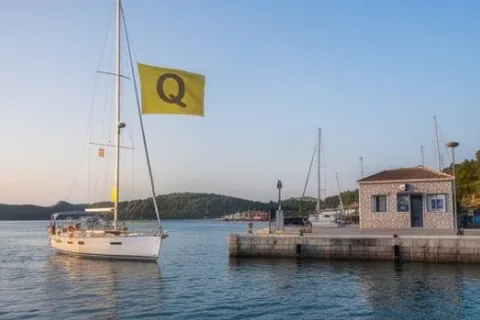
Nouméa is the only port where you can complete immigration formalities. You may make a first stop for Customs at Lifou, Koumac, Hienghène or Touho, but then you have 72 hours to complete entry in Nouméa. Fly the Q flag until Immigration (Border Police), Customs and Biosecurity (SIVAP) have cleared you, call Port Moselle on VHF 67, and keep the stamped temporary admission form: the boat may stay up to 12 months.
Arrival step by step
Yes. Nouméa is the only port of entry for immigration. Lifou, Koumac, Hienghène and Touho can be used for a first technical stop (Customs only), after which you have 72 hours to complete formalities in Nouméa.
- Download the arrival forms in advance from the Port Moselle (SODEMO) website and tell the harbourmaster your ETA.
- Fly the Q flag from entering territorial waters, and the courtesy flag.
- Call Port Moselle on VHF 67; they can put you on the visitors' pontoon for formalities.
- Clear with the Border Police (PAF), Customs (clearance form, Annex 6-3) and Biosecurity (SIVAP). Do not put anything in the bins before Biosecurity has been.
- Declare goods of value; alcohol and cigarettes above the allowance may be sealed on board.
- Keep the stamped temporary admission form for the whole stay: you need it for duty-free parcels and to leave.
Ports of entry boaters use
- Port Moselle, Nouméa · Grande Terre
The only port for immigration formalities; visitors' pontoon, VHF 67. - Koumac · North-west Grande Terre
First technical stop for Customs only; 72 hours to finish in Nouméa. - Lifou · Loyalty Islands
First technical stop for Customs only.
Papers to have on board
- Passports and any visas required
- Clearance (zarpe) from your last port
- Customs clearance form (Annex 6-3)
- Ship's registration papers
- Crew list
- Temporary admission form once stamped
- Captain's letter for crew arriving or leaving by plane
Crew, passports and visas
French entry rules apply. Visas are not needed by EU citizens, holders of a residence permit from a Schengen state, or citizens of Andorra, Australia, Monaco, New Zealand, San Marino, Switzerland and the Vatican; others check the French government's visa rules before arrival. Without a required visa you will not be allowed in. Crew joining or leaving by plane show the boat's documents and a letter from the captain.
🇫🇷 A French overseas territory, but not part of the EU and not in the Schengen area. France's own entry rules for this territory apply to the crew, and the territory's own customs rules to the boat: the EU 18-month temporary admission does not apply here, and time here does not count towards Schengen's 90 days in any 180.
How long the boat may stay
Temporary admission for a private pleasure boat for up to 12 months, if it is registered outside New Caledonia and owned and used by people established outside it. The boat may not be lent or given away; selling it needs a request to Customs and may make duties payable.
Fees, taxes and permits
- No entry fees for yachts unless a pet, aircraft, vehicle or motorcycle is on board
- Port Moselle berth fees apply; amounts were not checked here
Buoyage and navigation marks
IALA region ANew Caledonia uses region A buoyage.
Red to port when coming in from sea (the opposite of the Americas, Japan, Korea and the Philippines). Preferred channel marks (a lateral mark with a band of the other colour) follow the same colours: the main colour tells you which side to leave the mark on when following the preferred channel.
The same everywhere: yellow and black cardinal marks (pass on the named side: north, east, south or west of the danger), black and red isolated danger marks, red and white safe water marks, yellow special marks, and the blue and yellow emergency wreck mark. Where a channel has no obvious direction, the chart shows the direction of buoyage with a small arrow. All marks explained. Always follow the chart and local notices: these are summaries, not a navigation source.
Anchoring, marine parks and protected areas
Much of the lagoon is a UNESCO World Heritage area with marine reserves: check the zoning before anchoring and fishing.
Pets on board
Cats and dogs go into quarantine for 10 days, with a compulsory prior request. Animals that have visited countries with rabies are not allowed.
Fuel and duty
Boats in transit can receive duty-free parcels by showing the temporary admission form. Spare parts can be tax-exempt, usually set up on departure through a customs agent (form EX9).
Seasons and office hours
The cruising season is May to October; cyclones come from November to April. Many yachts arrive from Vanuatu or Fiji in September and October and leave for Australia or New Zealand in October and November.
Leaving the country
Present the temporary admission form to Customs (Nouméa-Port office) and complete departure formalities with the Border Police. If you leave the boat while you travel, Customs can place it under a bonded regime and hold its papers.
Common mistakes and fines
- Not completing formalities in Nouméa within 72 hours of a first stop elsewhere.
- Throwing anything in bins before Biosecurity has inspected.
- Fresh food, plants and animal products are restricted: arrive with little.
- Cats and dogs need a prior request and 10 days' quarantine; animals that have been in rabies countries are not allowed.
Where the sources disagree
These points were unclear or have changed recently. Ask the port authority or customs on arrival.
- Advance notice timing and method were not stated on the Customs page; tell Port Moselle and Customs before arrival.
- Fees for pets and for Biosecurity were not confirmed in this check.
Questions boaters ask
Can I clear in outside Nouméa?
Only for a first Customs stop at Lifou, Koumac, Hienghène or Touho; you then have 72 hours to complete everything in Nouméa.
How long can the boat stay?
Up to 12 months under temporary admission.
Can I bring my dog?
Only with a prior request and 10 days' quarantine, and not if it has been in a rabies country.
Official sources
The authority pages this guide rests on, with the date each was last opened and read.
- Douane de Nouvelle-Calédonie: customs formalities for pleasure boats
douane.gouv.nc · checked 26 Oct 2026 - SODEMO: Port Moselle, Nouméa
sodemo.nc · checked 26 Oct 2026
Cruising guides and sailor reports
Used for practical detail and recent experience; where they disagree with an official page, the official page wins and the point is listed under "Where the sources disagree".
This guide is general information for private, non-commercial yachts and is not legal advice. Rules and fees change; confirm with the port authority, customs or your agent before arrival. Seen something out of date? Tell us.
Other countries
Albania · Antigua and Barbuda · Australia · Bahamas · Barbados · Belgium · Belize · Bermuda · Brazil · British Virgin Islands · Bulgaria · Canada · Cape Verde (Cabo Verde) · Colombia · Cook Islands · Costa Rica · Croatia · Denmark · Dominica · Dominican Republic · Ecuador · Egypt · Estonia · Fiji · Finland · France · French Polynesia · Georgia · Germany · Gibraltar · Greece · Grenada · Guadeloupe · India · Indonesia · Ireland · Israel · Italy · Japan · Madagascar · Malaysia · Maldives · Malta · Martinique · Mauritius · Mexico · Montenegro · Morocco · Netherlands · New Zealand · Norway · Oman · Panama · Papua New Guinea · Philippines · Poland · Portugal · Réunion · Saint Helena · Saint Lucia