Arriving by boat in Saint Lucia
 Arriving by boat in Saint Lucia
Last checked against 3 official sources
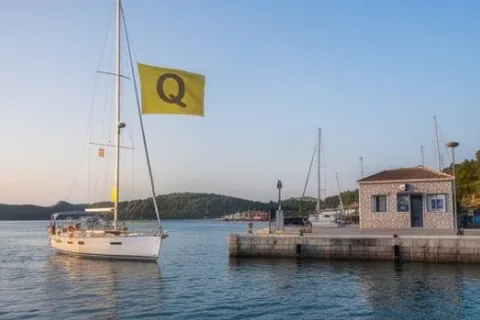
Clear in at a port of entry immediately on arrival, and within 24 hours at the latest, first with Port Health and then with Customs and Immigration. You can file the boat and crew details in advance on SailClear and the online immigration form up to 72 hours before arrival. After clearing out you have 72 hours to leave.
Arrival step by step
Yes. Clear in at a port of entry. Castries is the capital and site of the main Immigration Office and Customs firearm storage.
- File the boat and crew on SailClear, and complete the online immigration (ED) form, within 72 hours before arrival.
- Go directly to a port of entry; do not stop elsewhere first.
- Keep crew on board until Customs clearance, except in an emergency.
- Report to Port Health with the crew list and the Maritime Declaration of Health.
- Clear with Customs and Immigration with ship's papers, last port clearance and all passports.
- Declare firearms and any pet; pets need an import permit and a vet inspection before going ashore.
- Pay Port Authority fees and any overtime, and keep receipts.
- Submit a new crew list whenever crew changes.
Ports of entry boaters use
- Rodney Bay · North-west
Main yacht marina with customs and immigration on site; duty-free fuel after clearing out. - Marigot Bay · West coast
Sheltered bay with customs and immigration; duty-free fuel at Capella Marina after clearing out. - Soufrière · South-west
Port of entry next to the Pitons and the SMMA moorings. - Vieux Fort · South
Port of entry near Hewanorra airport; burglary reports when boats are left unattended.
Papers to have on board
- Ship's registration papers
- Clearance from the last port with a Customs declaration
- Passports for all on board
- Visas where needed
- Crew list and Maritime Declaration of Health
- SailClear and online immigration form confirmations
- Pet import permit and veterinary documents if a pet is aboard
- Temporary Importation form if leaving the boat unattended for more than about 6 weeks
Crew, passports and visas
Saint Lucia is not in the EU, so Schengen and EES do not apply. UK citizens need no visa and are normally given up to 6 weeks on entry; complete the online immigration form no more than 3 days before arrival (GOV.UK, Dec 2025). Up to 3 months can be requested and yacht crew can be granted up to 6 months. Some nationalities need a visa; visa on arrival is available only at Hewanorra airport. Extensions are made in person at the Immigration Office in Castries. Crew flying in need an onward or return ticket; crew leaving by sea need a letter from the skipper with the departure date and next destination. Passports are stamped on departure day.
How long the boat may stay
No VAT style temporary admission period is stated.
Fees, taxes and permits
- Pratique (Port Authority), under 100 GRT: EC$10 at any time.
- Clearance (Port Authority): EC$5 under 40 ft, EC$15 over 40 ft (Apr 2025).
- Navigational aids (Port Authority): EC$15 (Apr 2025).
- Departure tax: EC$33 or US$13 (Apr 2025).
- Customs overtime: EC$100 on Saturdays and weekday after hours, EC$150 on Sundays and holidays (Apr 2025).
- SMMA Soufrière: mooring permit EC$25, daily entrance EC$3 (US$1) per person, mooring up to 70 ft EC$54 (US$20) per night or EC$320 (US$120) per week (Apr 2025).
- Visitor extension beyond 3 months: EC$100 per 21-day period (Apr 2025).
- Pet import permit: EC$45 (Apr 2025).
- Cruising permit (occasional licence) applies to commercial and charter yachts only: EC$200 up to 40 ft, EC$300 for 41-70 ft, EC$400 over 70 ft, valid up to 6 months (Apr 2025).
- SailClear subscription: US$25 per year from 1 May 2024.
Skipper's licence and VHF
None of the sources consulted states a skipper licence or VHF certificate requirement for a visiting private yacht. Chartered and commercial yachts need the occasional licence (cruising permit); follow the charter company's rules on qualifications.
Buoyage and navigation marks
IALA region BSaint Lucia uses region B buoyage.
Red right returning: red to starboard when coming in from sea. Preferred channel marks (a lateral mark with a band of the other colour) follow the same colours: the main colour tells you which side to leave the mark on when following the preferred channel.
The same everywhere: yellow and black cardinal marks (pass on the named side: north, east, south or west of the danger), black and red isolated danger marks, red and white safe water marks, yellow special marks, and the blue and yellow emergency wreck mark. Where a channel has no obvious direction, the chart shows the direction of buoyage with a small arrow. All marks explained. Always follow the chart and local notices: these are summaries, not a navigation source.
Anchoring, marine parks and protected areas
The Soufrière Marine Management Area (SMMA) covers the Soufrière and Pitons coast and has yacht mooring areas and fishing priority areas. Use SMMA moorings and pay the mooring and entrance fees to SMMA rangers, who issue receipts. No fines were found.
Pets on board
Apply in advance to the Veterinary and Livestock Services Division (vlsdsec.agriculture@govt.lc) for an import permit and notify the port, date and time at least 3 days before arrival. Almost all cats and dogs arriving by sea are treated as Category 2: microchip first, approved rabies vaccine, then a rabies titre (FAVN) test about 30 days later; entry only 3 months after the blood sample date. Within 14 days before export: worm and tick treatment and an official health certificate. Dogs and cats need extra vaccines and tests. The pet must be inspected by a Veterinary Officer before going ashore. Permit fee EC$45.
Fuel and duty
Duty-free fuel is available after clearing out at the Rodney Bay fuel dock and at Capella Marina in Marigot Bay. Duty relief also exists for parts and equipment used in repairs.
Seasons and office hours
Weekend, holiday and after-hours clearance costs overtime (EC$100-150, Apr 2025). Clearance at Vieux Fort may need a trip to the airport Immigration office.
Coming from or going to Turkey
No rules specific to boats from Turkey were found. Bring the clearance from your last port of call. For pets, Saint Lucia treats almost all cats and dogs arriving by sea as Category 2, so plan the titre test months ahead.
Leaving the country
Clear out with Customs and Immigration, have passports stamped and leave within 72 hours (24 hours for local or charter boats). If staying under three days you can clear in and out at the same time on arrival. Duty-free fuel can be bought after clearing out at Rodney Bay fuel dock and at Capella Marina, Marigot Bay.
Common mistakes and fines
- Not clearing in within 24 hours of arrival: You can be fined.
- Arriving with a pet without a permit and a titre test taken at least 3 months earlier.
- Leaving the boat unattended at Vieux Fort while going to the airport Immigration office: daytime burglaries reported.
- Dinghy theft in Rodney Bay and Marigot Bay.
- Paying unofficial charges at Soufrière and the Pitons: ask for the SMMA receipt.
Where the sources disagree
These points were unclear or have changed recently. Ask the port authority or customs on arrival.
- Length of stay on entry: GOV.UK says 6 weeks; Up to 3 months can be requested and up to 6 months for yacht crew.
- Passport validity: GOV.UK says valid beyond your departure date; At least 6 months.
- A 2018 cruiser report describes a Customs officer charging an extra EC$125 for Soufrière mooring with no documentation; this is not in the fee schedule.
- The official Customs (customs.gov.lc) and Tourism Authority yacht clearance pages could not be read; fees come (Apr 2025).
- Whether the online immigration form is enforced for yachts varies by officer.
Questions boaters ask
Does Saint Lucia use SailClear?
Yes. SailClear is operational and filing in advance saves time at Customs. The subscription is US$25 a year since May 2024.
How long after arrival must I clear in?
Immediately, and within 24 hours at the latest, or you may be fined.
How long do I have to leave after clearing out?
72 hours for private yachts, 24 hours for local or charter boats.
What does a night on a Pitons mooring cost?
EC$54 (US$20) per night up to 70 ft, plus a EC$25 mooring permit and EC$3 per person entrance (Apr 2025).
Can I leave my boat in Saint Lucia and fly home?
Usually up to about 6 weeks without a form. For longer, file a Temporary Importation form with Customs and the marina.
Can I buy duty-free fuel?
Yes, after clearing out, at Rodney Bay fuel dock or Capella Marina, Marigot Bay.
Marinas in Saint Lucia
Official sources
The authority pages this guide rests on, with the date each was last opened and read.
- GOV.UK: St Lucia entry requirements
GOV.UK · checked 25 Oct 2026 - Saint Lucia Tourism Authority: Yachting
stlucia.org · checked 25 Oct 2026 - Soufrière Marine Management Association
smma.org.lc · checked 25 Oct 2026
This guide is general information for private, non-commercial yachts and is not legal advice. Rules and fees change; confirm with the port authority, customs or your agent before arrival. Seen something out of date? Tell us.
Other countries
Albania · Antigua and Barbuda · Australia · Bahamas · Barbados · Belgium · Belize · Bermuda · Brazil · British Virgin Islands · Bulgaria · Canada · Cape Verde (Cabo Verde) · Colombia · Cook Islands · Costa Rica · Croatia · Denmark · Dominica · Dominican Republic · Ecuador · Egypt · Estonia · Fiji · Finland · France · French Polynesia · Georgia · Germany · Gibraltar · Greece · Grenada · Guadeloupe · India · Indonesia · Ireland · Israel · Italy · Japan · Madagascar · Malaysia · Maldives · Malta · Martinique · Mauritius · Mexico · Montenegro · Morocco · Netherlands · New Caledonia · New Zealand · Norway · Oman · Panama · Papua New Guinea · Philippines · Poland · Portugal · Réunion · Saint Helena